
- Read Genesis 4
MORNING— Bringing Out Our Best
- Focal Passage: Genesis 4:3–4
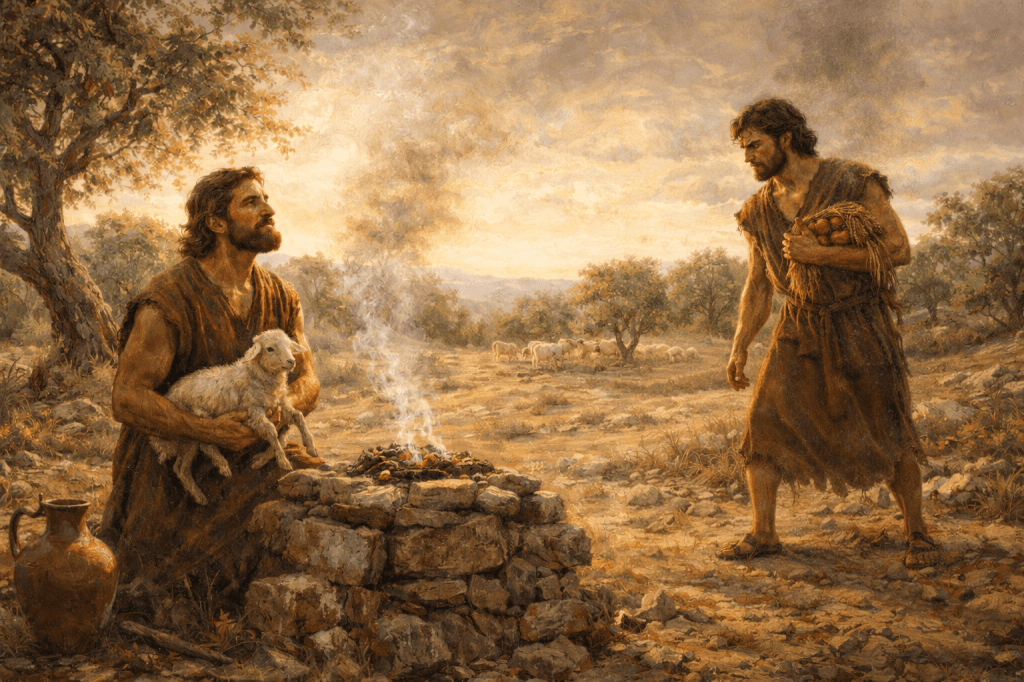
“So it came about in the course of time that Cain brought an offering to the LORD of the fruit of the ground. Abel, on his part also brought of the firstlings of his flock and of their fat portions. And the LORD had regard for Abel and for his offering.”
Cain and Abel both brought offerings to God, but Scripture carefully notes a difference. Cain brought an offering. Abel brought the firstlings and the best portions. The issue was not the kind of gift but the priority of the heart. Abel honored God with what mattered most. Cain offered something—but not his best.
Most of us understand this instinctively. If you’re invited to a wedding, you don’t bring whatever happens to be lying around the house. You choose carefully. You give intentionally. What you bring reflects how you value the relationship.
Now Scripture never suggests that farming was inferior to shepherding. What mattered was devotion. Abel approached God with reverence and trust. Cain approached God on his own terms. And when his offering was not received, resentment took root.
Genesis 4 quietly asks whether we approach God with the same intentionality. Worship that costs nothing often means little. God is not impressed by appearance, but He is honored by devotion. Abel’s offering revealed trust and gratitude. Cain’s revealed reluctance.
This story asks us a quiet but searching question: When I come before God, am I offering Him my best—or what’s left over? God does not demand perfection, but He does desire priority. What we give first reveals what we value most.
- Reflection: When it comes to your time, attention, and worship, are you offering God your best—or simply what fits comfortably into your schedule?
EVENING— Sin at the Door
- Focal Passage: Genesis 4:6–7
“If you do not do well, sin is crouching at the door; and its desire is for you, but you must master it.”
Before Cain ever lifted his hand against his brother, God intervened. Sin, the Lord warned, was crouching at the door—like a predator waiting patiently for the right moment. Cain was not yet guilty of murder, but he was already standing at a dangerous threshold. Anger had taken root. Resentment was settling in. And God, in mercy, spoke before the damage was done.
Counselor and author Ed Welch observes, “Anger is often the result of unmet desires that have been allowed to grow unchecked.” Cain wanted affirmation. He wanted recognition. When those desires were frustrated, anger began to simmer.
Similarly, Paul Tripp writes, “People don’t usually explode in anger without first rehearsing it in their hearts.” Cain didn’t act impulsively. He replayed the offense. He nurtured the grievance. And over time, what was internal became destructive.
We know this pattern well. A comment we can’t let go. A comparison we keep revisiting. A disappointment we never bring into the light. Sin rarely kicks the door down. It waits for us to leave it cracked open.
God’s warning to Cain still carries hope: “You must master it.” Cain was not powerless. He could choose obedience. He could respond rightly. The tragedy was not the presence of temptation, but the refusal to heed God’s counsel.
Tonight, Genesis invites us to pause and pay attention—before anger speaks louder than wisdom.
- Reflection: What desire, disappointment, or unresolved emotion might be quietly rehearsing itself in your heart, and how can you bring it honestly before God tonight?
- Closing Prayer: Father, thank You for warning me before damage is done. Help me recognize what is stirring in my heart and respond with humility and obedience. Give me the wisdom to confront sin early and the strength to choose what is right. Guard my heart as I rest tonight. Amen.

Leave a comment