
- Read Judges 2
MORNING— A Downward Spiral
- Focal Passage: Judges 2:10
“All that generation also were gathered to their fathers; and there arose another generation after them who did not know the LORD, nor yet the work which He had done for Israel.”
Joshua dies.
There is no final speech recorded in Judges, no dramatic farewell scene. Judges simply tells us that he is gathered to his fathers—and then something more troubling follows.
A generation arises that does not know the LORD.
This does not mean they had never heard His name. It means they had no living memory of His works. What had once been experienced firsthand was now secondhand. Stories were remembered, but conviction was not formed.
Judges 2 explains what happens next. Israel forgets. They drift. They adopt the practices of the nations around them. The people who once lived in cities they did not build and ate from vineyards they did not plant now assume those blessings as normal.
Memory fades quietly.
The danger here is not rebellion at first—it is neglect. The people do not wake up one day deciding to abandon God. They simply stop paying attention. Faith is inherited in name, but not practiced in life.
This is why Joshua pressed the people so hard to remember. This is why he set up stones. This is why he made them choose.
Judges 2 shows us how quickly spiritual amnesia can take hold when faith is no longer taught, modeled, and lived within a generation.
- Reflection: What truths about God’s work in your life need to be actively remembered and passed on, rather than assumed?
EVENING— A Cycle WE Know Too Well
- Focal Passage: Judges 2:18-19
“When the LORD raised up judges for them, the LORD was with the judge and delivered them… for the LORD was moved to pity by their groaning under those who oppressed them. But it came about when the judge died, that they would turn back and act more corruptly than their fathers…”
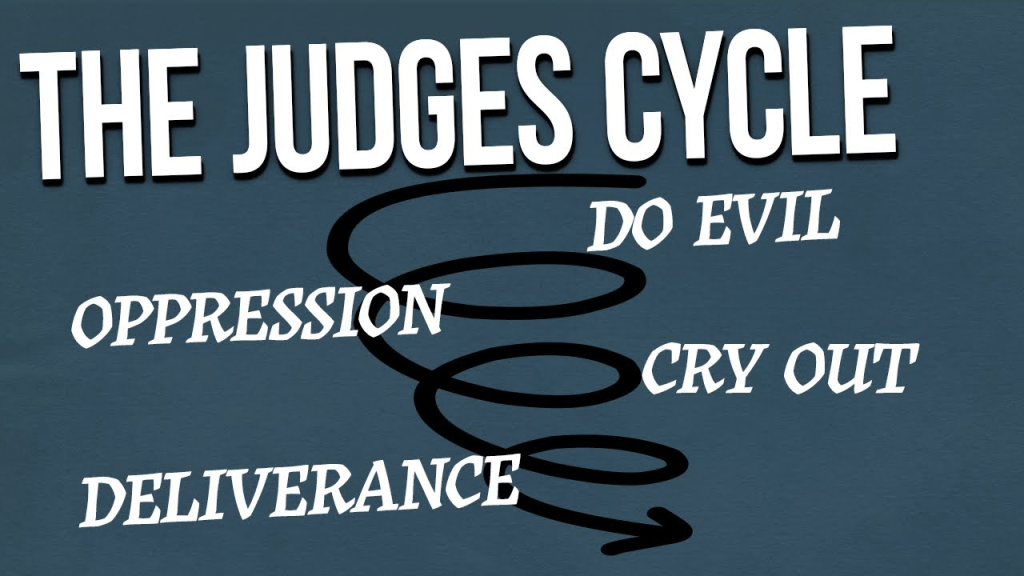
Judges 2 pulls back the curtain and shows us the pattern that will define the entire book.
The people forget the LORD.
They turn to other gods.
They suffer the consequences. (Subjugation by foreign nations.)
They cry out.
God raises up a deliverer in the form of a judge.
There is rest—for a while.
And then it begins again. Only the next cycle begins with an even more corrupt nation.
The cycle is exhausting to read—and painfully familiar to live.
What stands out is not Israel’s faithfulness, but God’s compassion. Each time the people cry out, God responds. Not because they deserve it, but because He is moved by their suffering. Mercy interrupts judgment again and again.
Judges are temporary saviors. They rescue, but they cannot transform the heart. Each deliverer dies, and the cycle resumes—often worse than before.
The New Testament helps us understand why.
Paul writes, “For the good that I want, I do not do, but I practice the very evil that I do not want” (Romans 7:19). The problem is not lack of rescue—it is the need for a deeper deliverance.
Judges points us toward the longing for a Savior who does more than deliver from enemies—One who rescues from sin itself. Where judges fail and cycles repeat, Christ succeeds and brings lasting rest.
Hebrews reminds us that if rest had been found through earlier deliverers, God would not have spoken of another day (Hebrews 4:8–9). The cycle of Judges makes that clear.
God’s patience in Judges is astonishing. His mercy is relentless. And His grace prepares the way for something—and Someone—greater.
- Reflection: What kinds of “deliverance” do you most often ask God for—and how might He be inviting you to seek not just relief, but lasting change?
- Closing Prayer: Merciful God, when memory fades and our hearts wander, draw us back to You. Thank You for patience that meets us again and again, even when we repeat old patterns.
Amen.

Leave a comment