
- Read 1 Kings 15:8-22; 2 Chronicles 16
MORNING— Faithful for a Time
- Focal Passage 1 Kings 15:11
“Asa did what was right in the sight of the LORD, like David his father.”
Asa, Solomon’s great grandson, begins his reign over Judah well—remarkably well.
When the author of Kings introduces him, the verdict is clear and hopeful. Asa “did what was right in the sight of the LORD,” a phrase reserved for kings who swim against the current. Judah had not been clean spiritually. Idols lingered. Compromises had settled in. Yet Asa moves decisively.
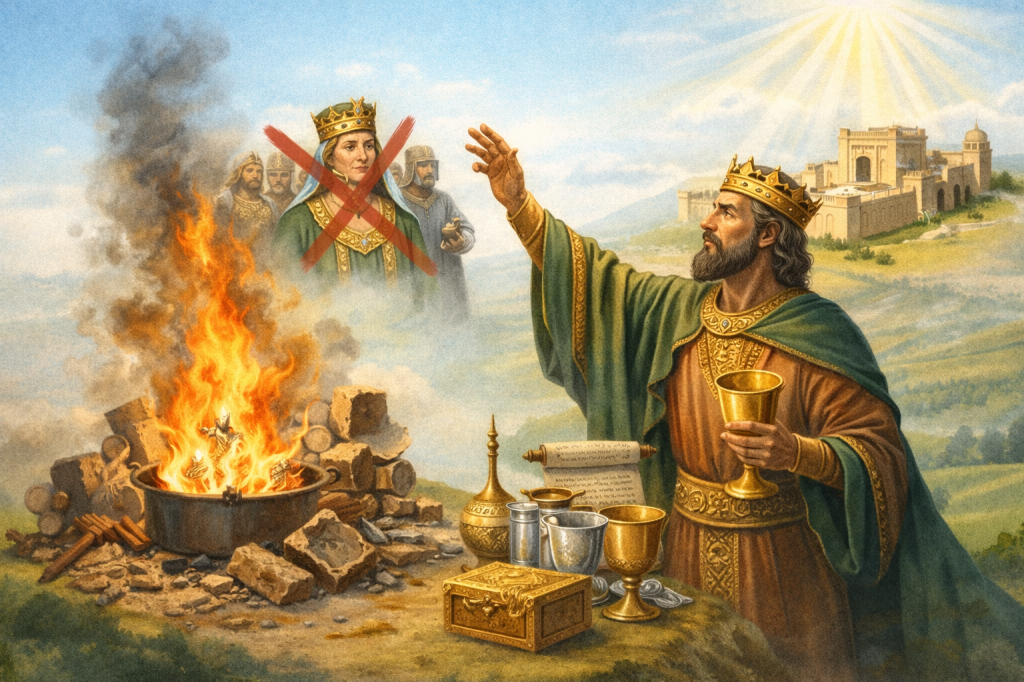
He removes the male cult prostitutes from the land. He tears down the idols his fathers had tolerated. And then comes the most revealing act of all: Asa removes Maacah from her position as queen mother.
That detail matters. The gebirah—the queen mother—was no ceremonial figurehead. She held political influence, shaped court culture, and often guided religious practice. Removing her meant resisting family pressure, disrupting power structures, and risking backlash. Asa does it anyway. He even cuts down her Asherah image 🌳 and burns it in the Kidron Valley.
This is not surface-level reform. This is costly obedience.
Kings tells us that Asa’s heart was “wholly devoted to the LORD all his days,” even while acknowledging that the high places remained. Those high places were likely attempts to worship Yahweh outside the temple—well-intended, perhaps, but misplaced. God had given Judah a place for worship. Devotion was never meant to be improvised.
Still, Asa seeks to honor the LORD. He brings silver and gold into the temple. He invests personally in the worship of God. For a season, he is a bright spot in a dark stretch of Israel’s history.
But Scripture reminds us of a sobering truth: starting well does not guarantee ending well.
- Reflection: How should we prepare our hearts in prayer before gathering with God’s people?
EVENING— When Trust Shifts
- Focal Passage: 2 Chronicles 16:7
“Because you have relied on the king of Aram and have not relied on the LORD your God…”
The turning point comes at Ramah.
Baasha, king of Israel, fortifies the city, tightening pressure on Judah. It is a real threat—economic, political, military. Asa responds quickly and effectively. He empties the treasuries of the temple and the palace and sends the silver and gold north to Ben-hadad, king of Aram. The plan works. Baasha retreats. Judah reclaims building materials. Cities are strengthened.
Politically, it’s a success.
Spiritually, it’s a collapse.
What’s missing is not intelligence but dependence. There is no prayer recorded. No prophet consulted. No assembly called. No repentance sought. Asa doesn’t turn to the LORD—he substitutes for Him.
What once symbolized God’s blessing—the silver and gold dedicated to His house—now becomes currency for human alliance. Kings records the victory. Chronicles reveals the cost.
Hanani the seer confronts Asa with words that echo far beyond this moment: “The eyes of the LORD move to and fro throughout the earth that He may strongly support those whose heart is completely His.” Asa had seen that support before. When he relied on the LORD, God delivered him against overwhelming odds. Now, Asa relies on Aram—and God lets him feel the weight of that choice.
Asa’s response is telling. He imprisons the prophet. He oppresses the people. Later, when disease cripples his feet, he still refuses to seek the LORD.
The Ramah decision was not isolated—it was directional.
Asa’s life warns us gently but firmly: faithfulness can erode not only through rebellion, but through replacement—when trust shifts from God to what “works.”
- Reflection: Where might you be solving God’s problems without God? Does this call for repentance?
- Closing Prayer: Lord, thank You for the courage You give to begin well—and for the mercy You offer when trust begins to drift. Guard our hearts from quiet substitutions. Teach us not only to act wisely, but to rely deeply. May we finish our race leaning on You, not on what merely works. Amen.

Leave a comment