
- Read Esther 7; 9-10
MORNING— Wisdom at the Banquet
- Focal Passage Esther 7:3-4
“Then Queen Esther replied, ‘If I have found favor in your sight, O king, and if it please the king, let my life be given me as my petition, and my people as my request; for we have been sold, I and my people, to be destroyed, to be killed and to be annihilated.’”
Esther does not rush this moment. She reaches it deliberately.
She has already invited the king and Haman to two banquets. She waits. She watches. She allows tension to build. When she finally speaks, she does so in a setting where the king is receptive and Haman is exposed.
Her words are carefully chosen. She does not begin by accusing Haman by name. She begins with herself—“let my life be given me…”—and only then widens the scope to include her people. By the time Haman is identified, the king already understands the gravity of what has been done.
This is tact joined to courage. Esther names the truth at the right moment, in the right place, and in a way that cannot be dismissed.
When the king leaves the room in anger and returns to find Haman collapsed on Esther’s couch, the matter is settled. Haman’s fate is sealed.
The device prepared for Mordecai is then revealed. It is not a gallows in the modern sense, but a tall wooden impaling spike, erected outside Haman’s house. The brutality of it matches the brutality of his intent. He is executed on the very instrument he prepared for another.
The reversal is complete. Pride collapses under its own weight. What was hidden is brought into the open.
- Reflection: Where might wisdom call you to speak truth with patience, clarity, and proper timing?
EVENING— A Festival Born from Survival
- Focal Passage: Esther 9:22
“As the days which the Jews rid themselves of their enemies, and the month which was turned for them from sorrow into gladness and from mourning into a holiday…”
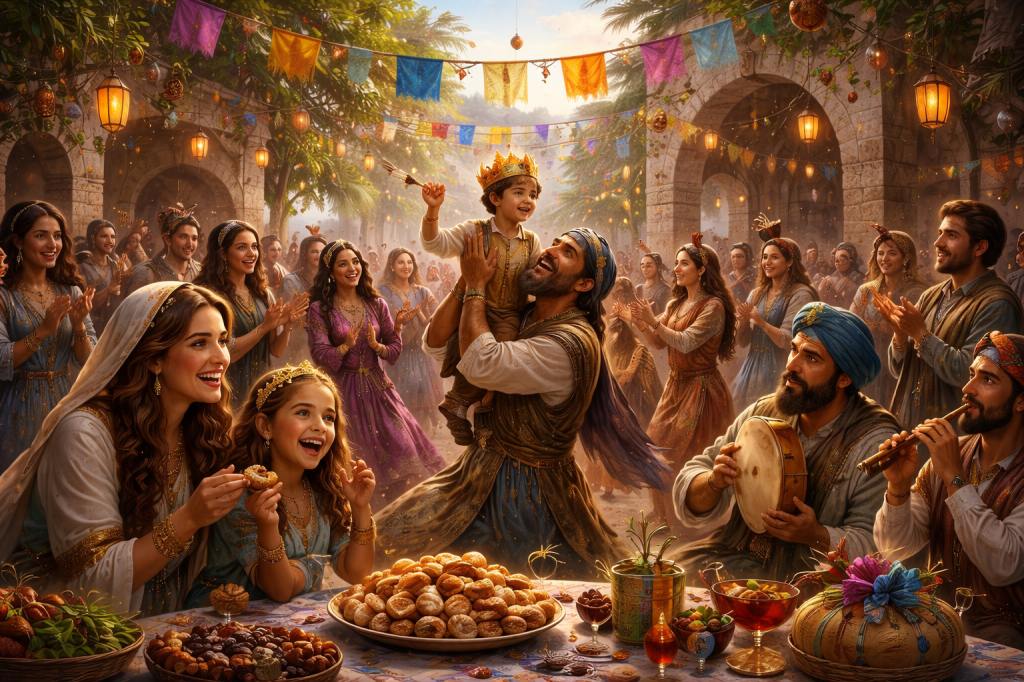
Deliverance does not erase memory. The threat was real. The danger was close. That is why the story ends not with silence, but with celebration.
Purim is established so the people will remember—not only that they survived, but how the situation was reversed. The lot cast to determine their destruction becomes the marker of their deliverance. What was meant to fix their end instead fixes their calendar of joy.
Notice how that joy expresses itself. The people feast. They send gifts. They share with those in need. Celebration spills outward into generosity, binding the community together.
The book then closes by showing what followed the crisis. Mordecai rises to a position second only to the king, and his leadership is remembered not for emergency measures, but for what came after. He is described as one who sought the good of his people and spoke for the welfare of his whole nation (Esth. 10:3).
The violence of the moment gives way to stability. Power is exercised not merely to survive, but to secure peace. The final picture is not fear-driven reaction, but sustained care for a people who once lived under the threat of annihilation.
- Reflection: After seasons of danger or upheaval, how might God be calling you to seek the good and welfare of others with the influence you now have?
- Closing Prayer: God of reversal and redemption, we thank You for the ways You bring gladness out of fear and stability out of chaos. Teach us to remember Your deliverance rightly, to celebrate with gratitude, and to use whatever influence we are given for the good and welfare of others. May our joy lead to faithfulness long after the crisis has passed. Amen.

Leave a comment