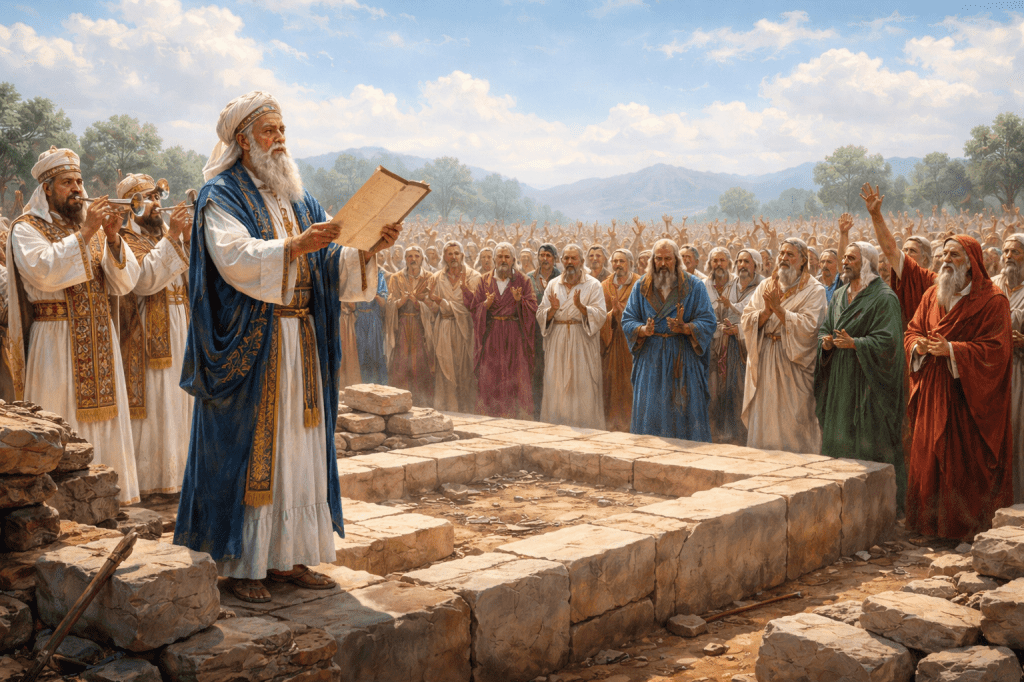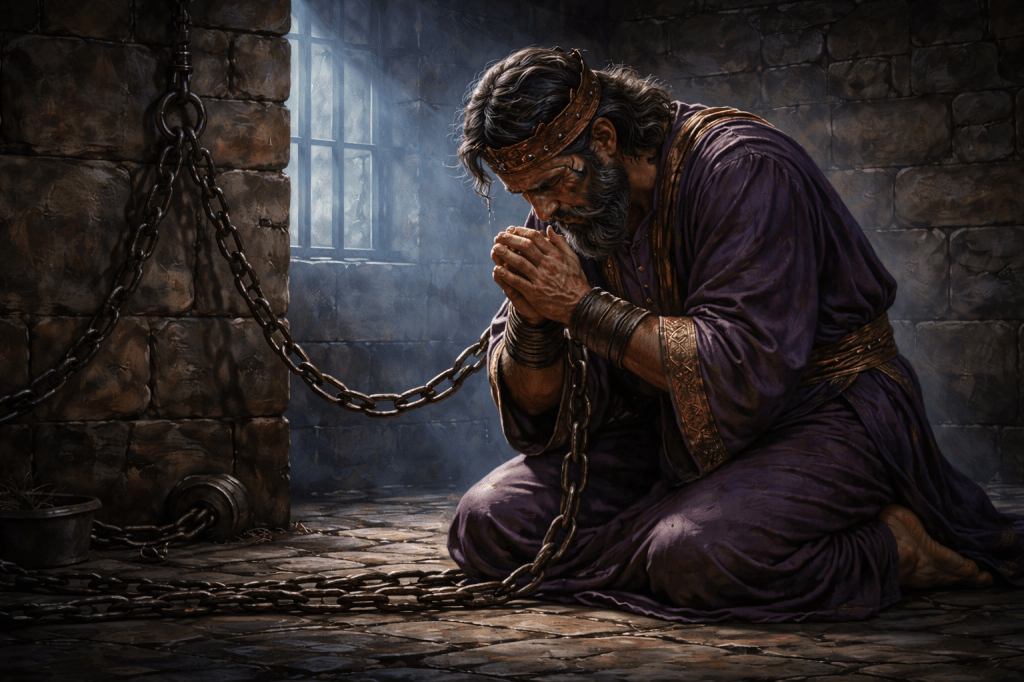
- Read Nehemiah 1 & 2
MORNING— Prayer: the Foundation of Calling
- Focal Passage Nehemiah 1:4-5
“When I heard these words, I sat down and wept and mourned for days; and I was fasting and praying before the God of heaven. I said, ‘I beseech You, O LORD God of heaven, the great and awesome God, who preserves the covenant and lovingkindness for those who love Him and keep His commandments…’”
In the English countryside near Leicester there is an old church with a remarkable inscription on the wall. It remembers Sir Robert Shirley, who built that church during Cromwell’s turbulent years. The words read:
“In the year 1653, when all things sacred were throughout ye nation either demolished or profaned, Sir Robert Shirley, Baronet, did found this church: whose singular praise it is to have done the best of things in the worst of times, and hoped them in the most calamitous.”
Nehemiah would have understood that line.
He is living far from Jerusalem, in Susa, the luxurious winter capital of Persia. He holds a position of deep trust as cupbearer to King Artaxerxes—part bodyguard, part chief of security. You do not get that job by being sloppy or distracted. Nehemiah is competent, trusted, and busy.
Then news arrives.
A brother from Judah reports that the remnant in Jerusalem is in “great distress and reproach.” The walls are down. The gates are burned. The people are harassed and humiliated. Nehemiah could have offered the safe, polite response—“That’s too bad; I’ll be praying for you”—and gone back to work.
Instead, he lets the report break his heart.
“When I heard these words, I sat down and wept and mourned for days; and I was fasting and praying…”
Before Nehemiah ever lifts a stone, he falls to his knees. Before he becomes a builder, he becomes an intercessor. His prayer is soaked with Scripture—confession of sin, remembrance of God’s promises to Moses, appeal to God’s covenant love. He includes himself in the problem: “I and my father’s house have sinned.” The ruins of Jerusalem are not “their issue” out there; they are “our issue” before God.
Calling for Nehemiah began when God let him truly see the ruins—and then let that sight drive him to prayer.
In a world where “all things sacred” often feel demolished, mocked, or shoved to the margins, the question still stands: Who will do the best of things in the worst of times? According to Nehemiah, the answer begins with those who weep, fast, and pray before the God of heaven.
And yes, that may mean our first “project meeting” is just us, a Bible, and a box of tissues.
- Reflection: Have you allowed God to show you any “ruins” that move you to honest confession and persistent prayer, rather than quick fixes or safe distance?
EVENING— From Knees to Action🌳
- Focal Passage: Nehemiah 2: 2, 4
“So the king said to me, ‘Why is your face sad though you are not sick? This is nothing but sadness of heart.’ Then I was very much afraid… Then the king said to me, ‘What would you request?’ So I prayed to the God of heaven.”
Four months pass between Nehemiah’s first broken-hearted prayer (in the month Chislev) and this moment (in Nisan). Four months of day-and-night praying, planning, and waiting. Nehemiah has not forgotten the ruins, but he has not rushed things either.
Then, one ordinary day, the king notices.
Nehemiah’s sadness shows on his face—dangerous in a court where the king’s presence was supposed to guarantee constant cheer. The text is wonderfully honest: “Then I was very much afraid.” Calling does not cancel fear; it simply refuses to obey it.
The king asks what is wrong. Nehemiah answers carefully, speaking of “the place of my fathers’ tombs” rather than using the explosive name “Jerusalem.” Then comes the question every praying servant eventually faces:
“What would you request?”
In that split-second, Nehemiah does what he has been doing for four months: “So I prayed to the God of heaven. I said to the king…” A breath-prayer goes up; a bold request comes out. Prayer is no longer only foundation—it is also fuel.
Nehemiah asks to be sent. He has a clear goal, a time frame, and even a supply list ready (letters for safe passage, timber from the king’s forest🌳). Prayer hasn’t replaced planning; it has shaped it. As someone once put it, Nehemiah does not live by “Ready, aim, aim, aim…” forever. There comes a moment to fire.
God answers through the very king who had earlier halted the rebuilding (cf. Ezra 4). The man who once blocked the wall now funds it. Nehemiah sums it up simply: “The king granted them to me because the good hand of my God was on me.”
Prayer, then action.
Ruins, then rebuilding.
Fear, then courage.
Nehemiah’s story reminds us that God often answers our prayers by sending us into the very ruins we’ve been praying about.
- Reflection: Is there a specific step of obedience—small or large—that your prayers have been pointing toward, but you have not yet taken?
- Closing Prayer: God of heaven, great and awesome, You see the ruins in our world and in our hearts. Teach us to bring them honestly to You, and then give us courage to act when the time comes. Help us trust that Your good hand is upon us as we obey. Amen.