• Read Jeremiah 31

    🌅MORNINGAn Everlasting Love

    • Focal Passage: Jeremiah 31:3

    “I have loved you with an everlasting love; therefore I have drawn you with lovingkindness.”

    Jeremiah 31 is one of the warmest chapters in the Old Testament.

    God is not often called Father in the Old Testament, but God says plainly: “For I am a Father to Israel.” (31:9)

    Later in the chapter, verses 18–20 read like the Old Testament version of the prodigal son story.

    Ephraim—the largest northern tribe, representing the whole nation—comes home in repentance. He confesses his wandering. He acknowledges his stubbornness. And then we overhear God’s response: “Is Ephraim My dear son? Is he a delightful child? Indeed, as often as I have spoken against him, I certainly still remember him; Therefore My heart yearns for him; I will surely have mercy on him,” declares the Lord. (31:20)

    That is the Father running down the road.

    God had disciplined. God had warned. God had spoken against sin.
    But His heart still yearned for Ephraim.

    Verse 3 explains why: “I have loved you with an everlasting love; therefore I have drawn you with lovingkindness.”

    That word lovingkindness is hesed—loyal covenant love. Love backed by promise. Love that does not evaporate when emotions cool. And then comes the promise that changes everything:

    “Behold, days are coming,” declares the Lord, “when I will make a new covenant…” (31:31)

    The old covenant revealed the problem clearly: law cannot change the human heart. The commands were holy—but the heart was resistant.

    So God declares: “I will put My law within them and on their heart I will write it…” (31:33)

    This is not external pressure. This is internal transformation.

    Ezekiel uses different language to describe the same reality: “I will give you a new heart and put a new spirit within you; and I will remove the heart of stone from your flesh and give you a heart of flesh.” (Ezekiel 36:26)

    A new heart.
    A new spirit.
    A new beginning.

    • Reflection: Do you see God primarily as a disappointed judge—or as a Father whose heart still yearns? What would it mean to come home to Him today?

    🌆EVENINGSin Remembered No More

    Focal Passage: Jeremiah 31:34

    “For I will forgive their iniquity, and their sin I will remember no more.”

    Jeremiah 31 is that hope announced centuries before the cross.

    Under the old covenant, sin was covered temporarily. Sacrifice after sacrifice reminded the people that the problem was still there. But here God says something decisive: “I will forgive their iniquity.
    “Their sin I will remember no more.”

    Before the Reformation, Martin Luther once sat in his monk’s cell overwhelmed by his sin. His confessor began reciting the Apostles’ Creed. When he reached the words, “I believe in the forgiveness of sins,” Luther stopped him.

    “Wait. What did you say?”

    “The forgiveness of sins.”

    Luther repeated it slowly, as if tasting it for the first time: “The forgiveness of sins. Then there is hope for me.”

    Jeremiah 31 is that hope—spoken long before Calvary.

    God is Father.
    God’s love is everlasting.
    God initiates.
    God transforms.
    God forgives.

    We often try to manage guilt. We rehearse it. We carry it. We try to compensate for it. God offers something different: forgiveness.

    Complete.
    Final.
    Personal.

    Earlier in the chapter, the people had a proverb: “The fathers have eaten sour grapes, and the children’s teeth are set on edge.”

    In other words—this mess isn’t my fault.

    But Jeremiah says in this new covenant era: each person will know the Lord. Each person will stand accountable. And each person may receive forgiveness.

    Not your parents’ faith.
    Not your church’s faith.
    Not your spouse’s faith.

    Yours.

    The New Covenant is deeply personal.
    And it is deeply secure.

    God ties His promise to the fixed order of creation: “If this fixed order departs from before Me… then the offspring of Israel also will cease…” (31:36)

    As long as the sun rises and the moon shines, His covenant purposes stand.

    That means tonight—whatever your failures, whatever your regrets—there is a covenant sealed in Christ’s blood that does not wobble with your performance.

    • Reflection:  Are you still carrying guilt that God has already addressed? What would it look like to rest—fully and finally—in the forgiveness secured through Christ?
    • Closing Prayer:  Father, thank You for everlasting love and covenant mercy. Write Your law upon our hearts. Forgive our iniquity. Teach us to live as people whose sin is remembered no more. Through Jesus Christ, the Mediator of the New Covenant, Amen.

    • Read Jeremiah 29

    🌅MORNINGA Letter to Exiles

    • Focal Passage: Jeremiah 29:10-11

    “For thus says the Lord, ‘When seventy years have been completed for Babylon, I will visit you and fulfill My good word to you, to bring you back to this place. For I know the plans that I have for you,’ declares the Lord, ‘plans for welfare and not for calamity to give you a future and a hope.’”

    In Jerusalem, verse 3 tells us that the puppet king, Zedekiah, was sending a letter to Babylonian king Nebuchadnezzar by messengers. We don’t know the content of that diplomatic correspondence.

    But we do know this: Jeremiah slipped a letter into that mail pouch. A letter addressed to the exiles in Babylon.

    So what does one say to a people in exile?

    They had watched friends die.
    They saw their beloved temple stripped and pillaged.
    They were marched away from the only place they had ever called home.

    They were desperate for something, and Jeremiah gives it — not in a sermon, but in a letter. This is not an “I told you so.” Not a scolding. Not a “you should have known better.”

    A good symbol for the book of Jeremiah would be a flower breaking through concrete. Up to this point in his book you may be thinking, “I see the concrete. Where’s the flower?”

    Here it is: hope. It has been said that human beings can live forty days without food, four days without water, four minutes without air — but not four seconds without hope. Hope is what Jeremiah delivers here. But notice what kind of hope. God does not say: “Pitch pup tents. Don’t plant anything. Don’t marry. Don’t build. You’ll be home soon.”

    No. “Build houses.” “Plant gardens.” “Have children.” “Have grandchildren.”

    You don’t build houses when you’re in transit.
    You don’t plant gardens if you’re leaving next week.
    Seventy years you will remain in Babylon. (v. 10) God tells them.

    For some, that sounded like a death sentence. If you are already forty or fifty, seventy years means you will not see the return.

    Abraham didn’t see everything God promised.
    Moses didn’t step into the land.
    We may not see the endgame either.

    But that does not mean what we do now is meaningless.

    God even tells them to seek the welfare — the shalom — of Babylon. Pray for the place of their captivity.  Their obedience in exile mattered.

    And then comes the line we frame and hang on our walls:

    “I know the plans that I have for you.”

    The Hebrew word can mean “thoughts.” “I know the thoughts I have concerning you.” Imagine hearing that in a refugee camp.

    They had to be thinking: We’re not even on God’s radar. He’s too angry. He’s done with us.

    But God says, No.

    You are still in My thoughts.
    My thoughts toward you are for shalom — not calamity.
    I have not forgotten you.
    I am thinking about your future.
    I am thinking about your hope.

    True hope is rooted in truth. “Hope-so” faith will not hold up. That is why the health-and-wealth version of hope collapses — it promises instant escape.

    Jeremiah promises something deeper. God’s will may have you in exile for a while. But exile is not the end of your story.

    • Reflection: If God has not forgotten you, how might that reshape the way you live in your present season?

    🌆EVENINGSeek and You Will Find

    Focal Passage: Jeremiah 29:12-14a

    “Then you will call upon Me and come and pray to Me, and I will listen to you. You will seek Me and find Me when you search for Me with all your heart. I will be found by you,” declares the Lord…”

    Seventy years.

    For some of Jeremiah’s listeners, that meant they would die in Babylon. The return would belong to their children and grandchildren.

    So what hope could possibly sustain them?

    Not immediate rescue.
    Not political reversal.
    Not revenge.

    God offered Himself.

    “You will seek Me and find Me… when you search for Me with all your heart.”

    Exile was not merely punishment. It was invitation. Stripped of temple, stripped of land, stripped of security — they were left with the one thing that mattered most.

    God.

    There is a modern example of this promise coming true.

    C.S. Lewis did not grow up a believer. As a young man, he considered Christianity a myth. He was brilliant, skeptical, and intellectually rigorous. But he was also restless. In his autobiography Surprised by Joy, he described himself as “the most dejected and reluctant convert in all England.”

    He did not stumble casually into faith. He argued against it. Wrestled with it. Resisted it.

    But he kept seeking.

    Through conversations with friends like J.R.R. Tolkien, through reading, through long walks and honest thought, Lewis began to realize that the God he resisted was the God who was there.

    In 1931, on a trip to the zoo with his brother, he later wrote:

    “When we set out I did not believe that Jesus Christ is the Son of God, and when we reached the zoo I did.” (Surprised by Joy, 1955)

    No lightning bolt. No emotional manipulation. Just a man who had sought with his whole mind and heart — and found.

    Or rather, discovered he had been found.

    Jeremiah’s promise is not sentimental. It is solid.

    “You will seek Me and find Me.”

    Not might. Not maybe.

    Will.

    Exile does not cancel that promise. It may actually make it possible.

    • Reflection:  If nothing changed around you, would you still pursue Him with your whole heart?
    • Closing Prayer:  Father, when we feel displaced, remind us that we are never misplaced. When the season feels long, anchor us in Your promises. Teach us to build, to plant, and to seek the peace of the place where You have set us. Give us hearts that search for You fully — not half-heartedly. And steady us with the assurance that Your plans are for shalom, for a future, and for hope. Until the day exile ends, keep us faithful. Through Christ our true home, Amen.
    • Read Jeremiah 23

    🌅MORNING— YHWH Tsidkenu: The Lord Our Righteousness 🌳

    • Focal Passage: Jeremiah 23:5-6

    “Behold, the days are coming,” declares the Lord, “When I will raise up for David a righteous Branch🌳; And He will reign as king and act wisely and do justice and righteousness in the land. In His days Judah will be saved, and Israel will dwell securely; and this is His name by which He will be called, ‘The Lord our righteousness.’”

    Jeremiah 23 begins with a woe.

    “Woe to the shepherds who are destroying and scattering the sheep of My pasture.”

    The leaders of Judah — kings, priests, prophets — had failed. They had not tended the flock; they had exploited it. And when Babylon pressed at the gates, King Zedekiah sent word to Jeremiah asking him to inquire of the Lord. The king wanted relief, not repentance. He wanted God’s intervention without God’s correction.

    The irony is striking. Zedekiah’s name means, “YHWH is righteousness.” Yet he bent righteousness to fit his politics. When he did not like the diagnosis, he tried to manage the message.

    God answers that failure not with abandonment but with promise.

    “I will raise up for David a righteous Branch 🌳.”

    The Hebrew term behind “righteous” comes from tsedek, meaning straight, just, aligned. In Deuteronomy, God required “just weights” — honest measures that were not crooked. Judah’s rulers had used crooked measures. God promises to straighten things out with a “righteous” King.

    Old Testament scholar Walter Brueggemann writes:

    “The promise of a ‘righteous Branch🌳’ is the announcement that Yahweh will not allow the Davidic promise to die, but will bring forth from the stump of apparent failure a new act of faithfulness.”
    (A Commentary on Jeremiah, p. 206.)

    Out of political collapse, God promises life.

    And then comes the name — one of the most astonishing in Scripture:

    YHWH Tsidkenu.
    “The Lord our righteousness.”

    Not merely a king who enforces righteousness.
    Not merely a reformer who teaches it.
    The Lord Himself becomes righteousness for His people.

    The New Testament makes the connection unmistakable. “By His doing you are in Christ Jesus, who became to us wisdom from God, and righteousness and sanctification, and redemption” (1 Corinthians 1:30). And again: “He made Him who knew no sin to be sin on our behalf, so that we might become the righteousness of God in Him” (2 Corinthians 5:21).

    Zedekiah wore the name.
    Jesus fulfills it.

    The righteous Branch 🌳 grows where the old line seemed cut down. The Shepherd we needed is also the righteousness we lacked.

    • Reflection: Are you still trying to present your own righteousness before God — or resting in the gift of His?

    🌆EVENING— Proclaiming Peace When There is No Peace

    Focal Passage: Jeremiah 23:16-17

    “Do not listen to the words of the prophets who are prophesying to you… They keep saying to those who despise Me, ‘You will have peace’; and as for everyone who walks in the stubbornness of his own heart, They say, ‘Calamity will not come upon you.’”

    Jeremiah’s problem was not only corrupt kings. It was prophets who comforted people with false assurances.

    They told the nation what it wanted to hear. No invasion. No exile. No consequences. “Peace,” they declared — even while injustice flourished and idolatry burned in the valleys.

    Tony Evans once told a story about his father. When he asked his dad whether he had gone to the doctor, his father said yes. When Tony asked what the doctor prescribed, his father gave a detailed report. “So is that what you’re doing?,” Tony asked.

    “No,” his father replied.

    “So what are you doing?”

    “I’m changing doctors.”

    That instinct lives in all of us.

    When the diagnosis exposes something we would rather not address, we look for another voice. Another preacher. Another podcast. Another explanation that hurts less. The prophets in Jeremiah’s day functioned like spiritual second opinions designed to soothe. They offered assurance without alignment. Peace without turning. Security without surrender.

    But real peace flows from YHWH Tsidkenu — the Lord our righteousness. Peace rooted in denial collapses. Peace grounded in righteousness stands. Jeremiah’s false prophets offered emotional relief without moral repair. Their message was soothing — and deadly.

    The New Testament reveals what Jeremiah only foresaw:

    “For He Himself is our peace, who made both groups into one and broke down the barrier of the dividing wall” (Ephesians 2:14, NASB 1995).

    Notice — He does not merely give peace.
    He is our peace.

    Peace is not an atmosphere.
    Peace is a Person.

    And that peace was purchased through blood, not denial. Through reconciliation, not avoidance. Through the righteous Branch 🌳 who became “The Lord our righteousness.”

    We must be careful which voices we allow to shape our sense of security. Not every calming message comes from God. Some peace is counterfeit because it costs nothing.

    But when righteousness is satisfied in Christ, peace is no longer fragile. It rests on something solid.

    • Reflection:  Is there an area where you are tempted to “change doctors” — preferring reassurance over repentance? Ask the Lord to make you hungry for righteousness, not merely relief.
    • Closing Prayer:  YHWH Tsidkenu, Lord our righteousness, we thank You that what we could not produce, You have provided. Guard us from soothing lies that promise peace without truth. Make us hungry for what is straight and just.
      Lead us as our Shepherd.  Amen.
    • Read Jeremiah 19-20

    🌅MORNING— A Broken Jar

    • Focal Passage: Jeremiah 19:10-11; 20:1-2

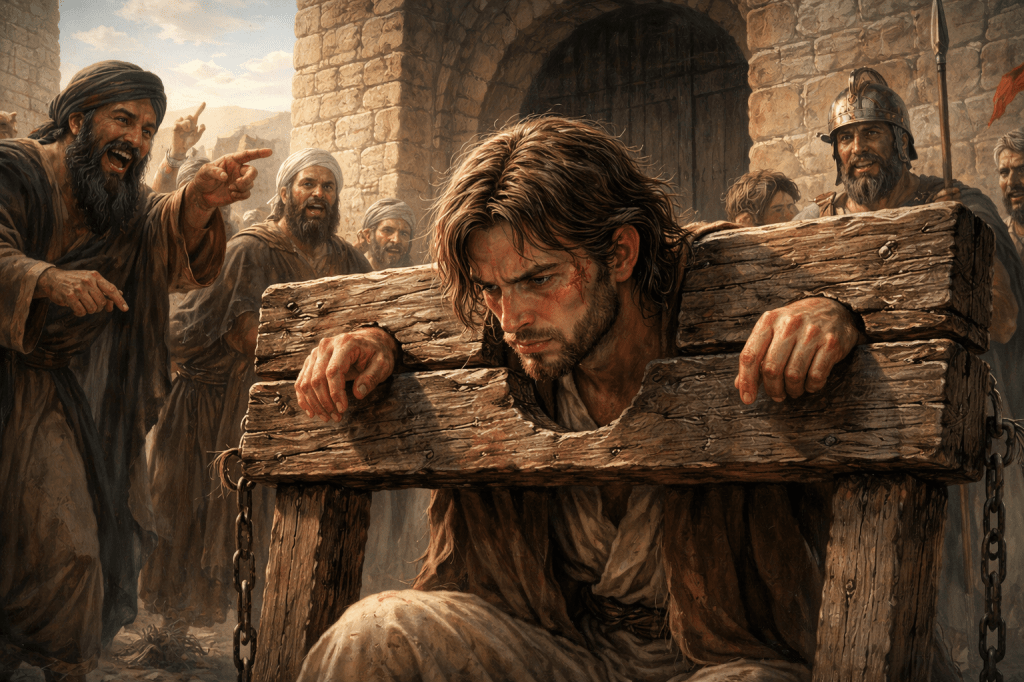
    “Then you are to break the jar in the sight of the men who accompany you and say to them, ‘Thus says the Lord of hosts, “Just so will I break this people and this city, even as one breaks a potter’s vessel, which cannot again be repaired…” When Pashhur the priest… heard Jeremiah prophesying these things, Pashhur had Jeremiah the prophet beaten and put him in the stocks…”

    Jeremiah 19 is a portrait of brokenness.

    God tells the prophet to buy a clay jar, gather the elders and priests, walk to the Valley of Ben-hinnom — a place stained by idolatry and child sacrifice — and preach judgment. Then, at the height of the message, he is to smash the jar in their presence.

    Clay shatters differently than it is shaped. While soft, it yields. Once hardened, it breaks.

    The sound of that jar hitting the ground would have echoed through the valley— and the souls of those listening. It was a warning: a people who refuse the soft shaping of the Potter eventually become brittle.

    Jeremiah obeys, breaks the jar, proclaims coming calamity and then he returns to the temple and repeats the message even more publicly.

    And immediately, a blow falls — not on the city, but on the prophet.

    Pashhur, chief officer in the house of the Lord, has Jeremiah beaten and twisted into the stocks. The Hebrew term suggests contortion — a device of public humiliation and physical pain. The man who announced breaking is himself bent and locked in place.

    Truth-telling has consequences.

    There is a temptation to think that obedience protects us from hardship. Jeremiah’s experience corrects that illusion. Faithfulness sometimes exposes us to hostility rather than shielding us from it.

    Yet notice what is not broken.

    The jar is broken.
    Jeremiah is bruised.
    But the word of the Lord remains intact.

    • Reflection: Is there an area of your life resisting the shaping hand of the Potter? Softness now prevents shattering later.

    🌆EVENING— A Broken Prophet

    Focal Passage: Jeremiah 20:9

    “But if I say, ‘I will not remember Him or speak anymore in His name,’ Then in my heart it becomes like a burning fire shut up in my bones; and I am weary of holding it in.”

    Jeremiah 20 reads like the private journal of a bruised man.

    He feels deceived.
    He feels mocked.
    He feels isolated.

    He has been beaten, twisted into the stocks, publicly humiliated. The crowd jeers. Trusted friends whisper. His enemies watch for him to fall.

    Jeremiah’s faith is put under strain.

    Jeremiah even tries to quit. He resolves to stop speaking in the Lord’s name. But something inside him will not let him go silent. The call burns. The word presses. The fire refuses to die. There is a divine compulsion that compels him to continue.

    Then, almost without warning, he pivots.

    “The Lord is with me like a dread champion.”

    The Hebrew carries the sense of a mighty warrior — formidable, unstoppable. Jeremiah feels small, but he knows his Defender is not. The same prophet who curses the day of his birth will also sing in the night. And that is what makes this passage so honest.

    Jeremiah is not steady because his emotions are steady. He is steady because the Lord is.

    There may be moments when obedience costs you reputation. Moments when speaking truth feels like walking a wire above eyes hoping to see you fall. Moments when you are misunderstood, mislabeled, or opposed.

    Jeremiah teaches us that broken does not mean abandoned.

    It is possible to feel crushed and still be called.
    It is possible to feel alone and still be accompanied.
    It is possible to protest and still return to praise.

    Verse 13 bursts into song not because the circumstances changed, but because Jeremiah remembers who stands with him.

    Sing to the Lord. Praise the Lord. He delivers the needy.

    The jar shattered.
    The prophet was bent.
    But the fire within remained.

    • Reflection:  What feels broken in you tonight — your courage, your reputation, your endurance? Ask the Lord to guard the fire in your bones and to be your champion in the struggle.
    • Closing Prayer:  Lord, when obedience costs more than we expected, steady us. When we feel bent by pressure or bruised by criticism, remind us that You are a mighty champion beside us. Keep Your word burning within us. Turn our protest into praise. and when we are broken, hold us fast. Amen.
    • Read Jeremiah 2:11-13; 17:5-8

    🌅MORNING— Broken Cisterns

    • Focal Passage: Jeremiah 2:12-13

    “Be appalled, O heavens, at this, and shudder, be very desolate,” declares the Lord. “For My people have committed two evils: They have forsaken Me, the fountain of living waters,
    To hew for themselves cisterns, broken cisterns that can hold no water.”

    Jeremiah 2 is not gentle. It is not subtle. It is courtroom language. God calls the heavens as witnesses and declares His charge.

    Two evils.

    First: they have forsaken Me.
    Second: they have replaced Me.

    God calls Himself “the fountain of living waters.” And they replaced Him with a cistern.

    In Jeremiah’s world, a cistern was a man-made reservoir, carved into rock to catch rainwater. It required effort. Skill. Planning. But if cracked, it leaked. If polluted, it poisoned. And no matter how well constructed, it could never match a flowing spring.

    To turn from a fountain to a cracked reservoir is irrational. Yet it is familiar.

    Today we may not bow to carved idols, but we carve cisterns. We trust reputation. We chase control. We lean on money, approval, distraction, comfort. Each promises to hold what only God can supply. Each leaks.

    Jeremiah does not describe this as weakness. He calls it evil — because it is a rejection of relationship. The fountain is not merely a resource. It is God Himself. This is why the Lord says, “Be appalled.” The heartbreak is relational. The people who were redeemed, sustained, and carried have walked away from the Source.

    The question presses closer than we might like: What have we trusted to hold us that cannot?

    A cracked cistern can look impressive. But eventually the stone fractures. And thirst returns.

    The Lord’s grief in Jeremiah 2 is not the anger of a distant judge; it is the sorrow of a spurned covenant partner. He is not merely offended. He is forsaken.

    And the invitation beneath the indictment is still there: return to the fountain.

    • Reflection:  Identify one “cistern” you have been relying on for security or satisfaction. What would it look like today to return to the living fountain instead?

    🌆EVENING— A Tree Planted by Waters 🌳

    Focal Passage: Jeremiah 17:7-8

    “Blessed is the man who trusts in the Lord and whose trust is the Lord. For he will be like a tree 🌳 planted by the water, that extends its roots by a stream and will not fear when the heat comes; but its leaves will be green, and it will not be anxious in a year of drought nor cease to yield fruit.”

    Jeremiah returns to the same choice with a different image.

    In chapter 2, we see cracked reservoirs.
    In chapter 17, we see a tree 🌳.

    The contrast is deliberate. One labors to store water. The other sinks roots into a source that never dries.

    Notice what Jeremiah does not promise. The tree 🌳 still faces heat. It still endures drought. Trusting the Lord does not remove climate; it changes connection.

    “Extends its roots by a stream.”

    Roots are hidden. They do their work below the surface. Strength develops underground before it appears in leaf and fruit. A tree 🌳 survives drought not because the sun disappears, but because its roots have reached water.

    Fear often rises not from heat itself, but from uncertainty about supply. The planted life draws from something deeper than circumstance.

    Jeremiah’s audience would soon experience siege and exile. The heat was coming. Yet stability was still possible. The difference was not personality or temperament. It was placement.

    Cursed is the one who trusts in flesh. Blessed is the one who trusts in the Lord.

    A broken cistern depends on what we can carve. A planted tree 🌳 depends on where it is rooted.

    One leaks.
    One lives.

    Tonight, consider your roots. What is feeding them? What stream are they drawing from?

    The fountain still flows. And the one who trusts in Him becomes like a tree 🌳 planted by water — steady, supplied, and bearing fruit.

    • Reflection:  In this current season of “heat” or pressure, what would it mean to deepen your roots in the Lord rather than scramble to reinforce a cistern?
    • Closing Prayer:  Father, You are the fountain of living waters. Forgive us for carving cisterns that cannot sustain us. Turn our hearts back to You, the only Source that never runs dry. Plant us deeply by Your stream. When heat rises and drought lingers, let our roots hold fast in You. Keep our leaves green and our lives fruitful, not for our reputation, but for Your glory. Through Christ, who invites the thirsty to come and drink, Amen.
    • Read Jeremiah 1

    🌅MORNING— A Prophet of Tears

    • Focal Passage: Jeremiah 1:4-5

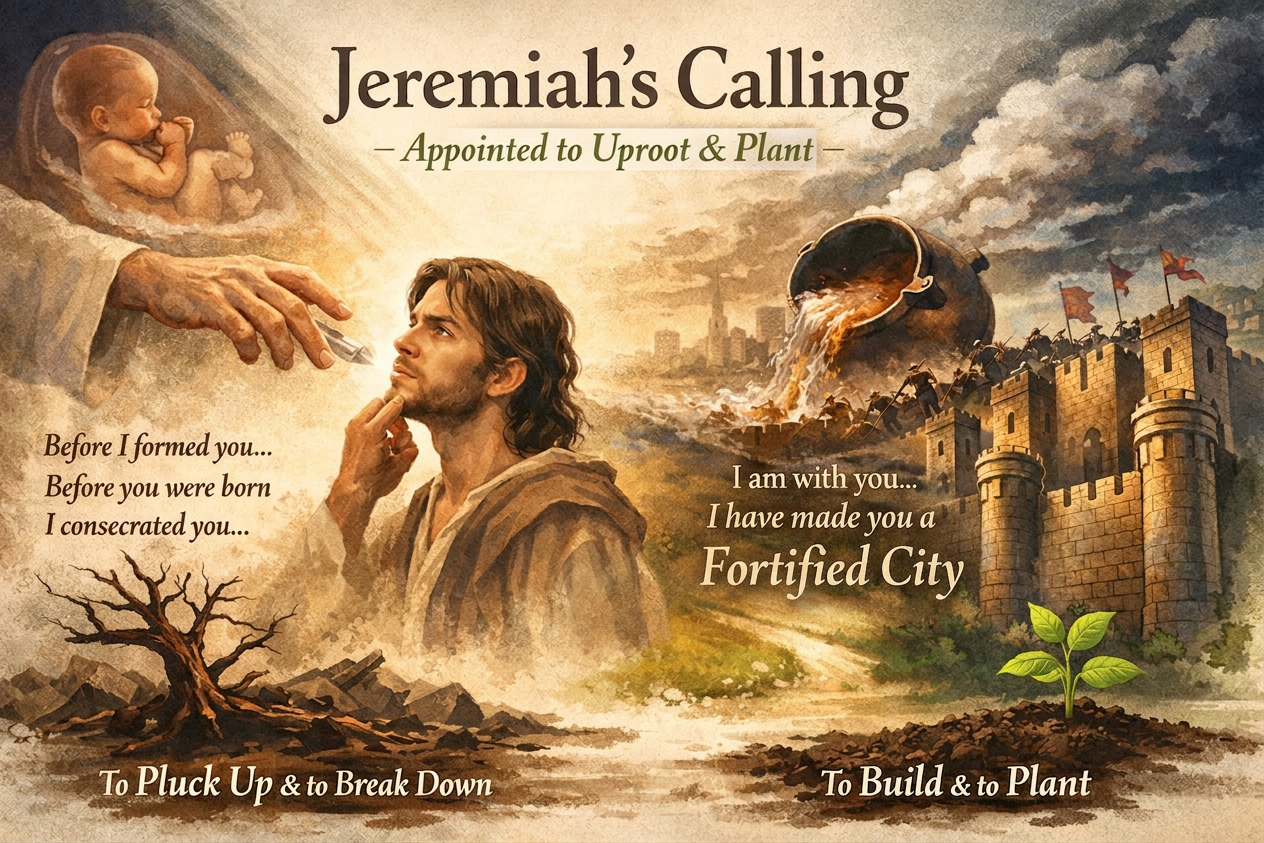
    “Now the word of the Lord came to me saying, ‘Before I formed you in the womb I knew you, and before you were born I consecrated you; I have appointed you a prophet to the nations.””

    Jeremiah lived during the final decades of Judah before exile. Reform flickered under King Josiah, then faded. Corruption hardened. Babylon gathered strength in the north. The moment demanded someone who could both pronounce judgment and carry grief. God did not choose a warrior prophet or a court poet. He chose a priest’s son from Anathoth with a soft heart and a strong spine.

    Jeremiah 1 does not begin with Jeremiah’s weakness, but with God’s initiative. The prophet’s calling is not presented as a career move or a spiritual promotion. It is rooted in the hidden work of God long before Jeremiah understood how his life would be shaped.

    “Before I formed you… I knew you.”

    The language is intimate and deliberate. The God who shaped him in the womb had already set him apart for a purpose that would stretch across nations and generations. Jeremiah would preach in a collapsing kingdom. He would speak truth to kings who did not want to hear it. He would watch Jerusalem fall. He would see hope be apparently buried under rubble and yet still proclaim God was faithful.

    None of that began with his resolve. It began with God’s intimate foreknowledge and consecration.

    We sometimes imagine calling as something we discover late, after years of trial and error. Jeremiah reminds us that God’s purposes precede our awareness. The One who forms also appoints. The One who knows also sends.

    Jeremiah’s assignment would involve tearing down and planting 🌱, uprooting false security and rebuilding hope. It would not be glamorous. It would be costly. Tender-hearted men do not naturally volunteer for collision with kings. But God places His servants precisely where they are needed in the unfolding of history.

    “Do not say, ‘I am a youth.’”

    Jeremiah’s first instinct was to object. Too young. Too inexperienced. Too fragile for this storm. But the Lord answers not with flattery or dismissal, but with presence:

    “Do not be afraid… for I am with you to deliver you.”

    Calling can never be sustained by personality. It is sustained by His presence alone.

    If Jeremiah’s life teaches us anything in its opening chapter, it is this: you are not an accident placed randomly in your time. The One who formed you has placed you. The One who knew you has purposes that extend beyond what you can see.

    You may not be called to stand before kings. But you are called — somewhere — to uproot what is false and to plant what is faithful 🌱.

    • Reflection:  Are you tender-hearted? Have you ever considered that God may yet call you to do hard things?

    🌆EVENING— Fortified for the Fight

    Focal Passage: Jeremiah 1:17-19

    “Now gird up your loins and arise, and speak to them all which I command you. Do not be dismayed before them, or I will dismay you before them. Now behold, I have made you today as a fortified city and as a pillar of iron and as walls of bronze against the whole land… They will fight against you, but they will not overcome you, for I am with you to deliver you,” declares the Lord”

    If the morning showed us God’s prior claim on Jeremiah’s life, the evening shows us the cost of that claim.

    The Lord does not soften the assignment. He tells Jeremiah to stand up, brace himself, and speak exactly what he is given. The message will not be welcomed. Kings will resist him. Priests will resent him. The people will harden themselves against him. Conflict is not a possibility; it is a certainty.

    “They will fight against you.”

    There is no illusion here that obedience makes life easier. Faithfulness can provoke opposition. Speaking truth can isolate you. Tender hearts can be wounded.

    And yet, the promise stands alongside the warning:

    “They will not overcome you, for I am with you.”

    Jeremiah is described as a fortified city, a pillar of iron, walls of bronze. At this point in the narrative, that description feels larger than the young man standing there. He does not look like bronze. He looks like someone who has just said, “I am a youth.” But God speaks strength into him before he feels it. The Lord names what He will make him.

    Strength in Scripture is often forged in the act of obedience. Jeremiah will not wake up one morning feeling like iron. He will become iron as he stands, speaks, suffers, and remains. God’s presence does not remove the battle; it ensures that the battle will not have the last word.

    There is something deeply comforting about that. The Lord does not promise Jeremiah applause. He promises accompaniment. He does not guarantee comfort. He guarantees Himself.

    Some of us need that reminder tonight. The calling you sensed in the morning may already feel heavier by evening. Resistance may have surfaced. Fatigue may have crept in. You may wonder if you misheard God.

    Jeremiah 1 says: the fight does not mean you are outside the will of God. It may mean you are standing squarely inside it.

    • Reflection:  What situation currently feels like opposition rather than calling? Ask the Lord to anchor you not in outcomes, but in His presence with you.
    • Closing Prayer:  Father, You are the One who forms, calls, and strengthens. Thank You that my life is not accidental and my obedience is not unnoticed. When I feel hesitant, remind me that You knew me before I knew myself. When I feel opposed, steady me with Your presence. If You call me to uproot, give me conviction. If You call me to plant 🌱, give me hope. and in every season, be my fortress and my deliverer.

    Through Christ, who stood firm for us,
    Amen.

    • Read Isaiah 55

    🌅MORNING— Higher Ways🌱

    • Focal Passage: Isaiah 55:10-11

    “For as the rain and the snow come down from heaven, and do not return there without watering the earth and making it bear and sprout, and furnishing seed🌱 to the sower and bread to the eater; So will My word be which goes forth from My mouth; It will not return to Me empty, without accomplishing what I desire, and without succeeding in the matter for which I sent it.”

    We often approach God with assumptions. We assume we know what He should do, how He should act, how long He should wait, how quickly He should fix what we have broken. Isaiah 55 interrupts that posture.

    After the sweeping invitation — “Come… listen… seek… return” — the Lord says something bracing:

    “For My thoughts are not your thoughts,
    Nor are your ways My ways,” declares the Lord.
    “For as the heavens are higher than the earth,
    So are My ways higher than your ways
    And My thoughts than your thoughts.” (Isaiah 55:8–9, NASB 1995)

    This is not God dismissing us. It is God anchoring us. His mercy is deeper than our despair. His justice is steadier than our outrage. His patience outlasts our panic. When we cannot trace what He is doing, we are invited to trust who He is.

    Then comes one of the most sweeping promises in all of Scripture:

    “For as the rain and the snow come down from heaven
    And do not return there without watering the earth
    And making it bear and sprout🌱…
    So will My word be which goes forth from My mouth;
    It will not return to Me empty,
    Without accomplishing what I desire,
    And without succeeding in the matter for which I sent it.” (vv. 10–11)

    Rain does not argue with the ground. It falls. It soaks. And the seed splits open under the soil long before any green appears above it.

    God says His Word works like that.

    A remarkable example of this unfolded in 1979 when an American pastor named Don Richardson traveled to the Yali tribe in the mountains of Irian Jaya (now Papua, Indonesia). The Yali were fiercely isolated and hostile to outsiders. Richardson’s team was attacked, and one of the missionaries was killed. Eventually, through years of patient presence, Scripture portions were translated and read aloud in the Yali language.

    At first there was little visible response.

    But as the story of Christ’s crucifixion was read — especially the moment when Jesus prayed, “Father, forgive them” — something shifted. Yali listeners later said they had never known a leader who forgave his enemies instead of taking revenge. That word settled into them. Over time, villages once known for warfare laid down their weapons. Churches were planted. The transformation was documented not only by missionaries but by anthropologists who had studied the tribe’s violent patterns beforehand.

    The Word did not return empty.

    It did not explode like fireworks. It fell like rain. And life followed.

    Isaiah 55 tells us that when God speaks — whether in promise, warning, comfort, or correction — something is happening beneath the surface. Even when we do not see immediate fruit, the rain is working.

    You may feel today as though nothing is changing. As though prayers bounce off the ceiling. As though Scripture you have read for years has gone quiet.

    It has not.

    Rain does not shout while it works.

    And God’s Word does not fail.

    • Reflection:  Ever been tempted to think God’s Word is doing nothing? What if the rain is already working beneath the soil?

    🌆EVENING— Trees That Clap🌳

    Focal Passage: Isaiah 55:12-13

    “For you will go out with joy and be led forth with peace; The mountains and the hills will break forth into shouts of joy before you, and all the trees🌳 of the field will clap their hands. Instead of the thorn bush the cypress 🌳 will come up, and instead of the nettle the myrtle 🌳 will come up, and it will be a memorial to the Lord, for an everlasting sign which will not be cut off”

    The chapter ends with procession and thunderous praise.

    “You will go out with joy
    And be led forth with peace;
    The mountains and the hills will break forth into shouts of joy before you,
    And all the trees 🌳 of the field will clap their hands.” (Isaiah 55:12)

    Isaiah pictures a people once exiled now walking home. And the landscape responds.

    Then he writes:

    “Instead of thornbushes , cypress trees 🌲 rise. Instead of briars , myrtle 🌿 grows. What once scratched and choked the ground gives way to something strong and fragrant… and it will be to the Lord for a memorial, for an everlasting sign which will not be cut off.” (Isaiah 55:13)

    Thorn and brier were signs of curse reaching back to Genesis. Cypress trees 🌲 and myrtle 🌿 signal restoration. What was tangled becomes planted. What once wounded becomes rooted and alive.

    And these trees 🌳 are not merely decoration. They are a memorial to the Lord.

    In the Old Testament, a memorial was a visible reminder of what God had done. Stones stacked after crossing the Jordan. Altars raised after deliverance. Something you could point to and say, The Lord did this.

    Isaiah says the restored landscape itself becomes that testimony.

    Forgiven lives become memorials.
    Replanted hearts become evidence.
    Where there was once ruin, something grows that points beyond itself.

    An “everlasting sign which will not be cut off.” That phrase matters. The exile had cut them down. Sin had cut them down. Enemies had cut them down.

    But what God plants will not be cut off.

    Recently my wife, Janine, went on a silent retreat in Kentucky. Afterward she posted this on Facebook: Psalm 96:12 “Then all the trees 🌳of the forest will sing for joy”. Another, Isaiah 55:12, says “the trees🌳 of the field shall clap their hands”. I don’t know how I didn’t see this before in my readings. I rediscovered it on my retreat when I went out to the woods to hike. Been thinking about those verses a lot lately. It makes so much sense to me and my complete joy when I’m in the woods! I’m not alone, me and trees🌳 are praising God together! I just love that!!

    Today if the weather is pleasant, why not go out and rejoice with the trees🌳!

    • Reflection:  Where has the Lord replaced thorn with something living in your life? Have you rejoiced with the trees at the transformation?
    • Closing Prayer:  Lord, Your thoughts are higher than ours and Your Word never fails. Water the hard places in us. Replace what was once wounded with what gives life. And let the work You plant in us stand as a testimony to Your covenant mercy. Amen.
    • Read Isaiah 53:4-12

    🌅MORNING— The Lamb in Our Place

    • Focal Passage: Isaiah 53:4-5

    “Surely our griefs He Himself bore, and our sorrows He carried; Yet we ourselves esteemed Him stricken, smitten of God, and afflicted. But He was pierced through for our transgressions,
    He was crushed for our iniquities; The chastening for our well-being fell upon Him, and by His scourging we are healed.”

    It was February 3, 1959 — “the day the music died.”

    Buddy Holly, Richie Valens, and J. P. “The Big Bopper” Richardson were killed when a small, chartered plane went down in an Iowa cornfield. The tour had been punishing — long drives through subzero weather, failing heaters, sickness spreading through the band. After a show in Clear Lake, Holly rented a plane to avoid another freezing bus ride.

    Waylon Jennings had originally been scheduled for one of the seats. Richardson, sick with the flu and exhausted, asked Waylon if he could take his place.

    Waylon agreed.

    Before takeoff, Holly teased him, “Well, I hope your ol’ bus freezes up.”
    Waylon replied lightly, “Well, I hope your ol’ plane crashes.”

    Five minutes later, it did.

    Jennings carried that exchange for the rest of his life. A seat surrendered. A life lost in another’s place. A substitute who paid a price.

    Isaiah 53 speaks of a substitution deeper than that.

    “Surely our griefs He Himself bore…
    The Hebrew word for “bore” is the same word used for the scapegoat in Leviticus 16. On the Day of Atonement, the priest laid his hands on the goat and confessed over it the sins of the people. The animal carried their iniquity away into the wilderness.

    Here the Servant carries ours.

    He was pierced for our rebellion. Crushed for our iniquity.
    The chastening that secured our peace fell upon Him.
    By His scourging we are healed.

    This substitution of the Servant for our sin, once properly understood, changes everything.

    Rose Price survived the concentration camp Treblinka in the second World War. Her mother and much of her family were murdered. Guards beat prisoners while sneering, “Jesus told us to hit you. Jesus hates you.”

    For years, she believed that lie.

    Then one day she picked up her daughter’s Bible.

    “I started reading it, and I noticed that he was the Lamb… “And he didn’t kill me, he didn’t put me in a camp, he didn’t kill my family. He died for me? He died for me! He loved me this much. That he gave himself for me.

    The story of Jesus’ death is still saving lives.
    More so than the promise of Heaven or the threat of Hell.
    If hearing about His sacrifice doesn’t reach you—little else will.

    “All of us like sheep have gone astray.”

    We wandered. Each of us turned to his own way. Sin is not merely weakness; it is revolt. It bends what is straight. It twists what is good. It fractures what was whole.

    In Christ, the wayward sheep can come home.

    “The LORD has caused the iniquity of us all to fall on Him.”

    • Reflection:  Have you allowed this to become personal? Not humanity in general — but you?

    🌆EVENING— The Satisfied Servant and the Open Invitation

    • Focal Passage: Isaiah 53:10-11a

    “But the LORD was pleased to crush Him, putting Him to grief; If He would render Himself as a guilt offering, He will see His offspring, He will prolong His days, and the good pleasure of the LORD will prosper in His hand. As a result of the anguish of His soul, He will see it and be satisfied…”

    The Servant did not resist.
    He did not defend Himself.
    He did not call down angels.

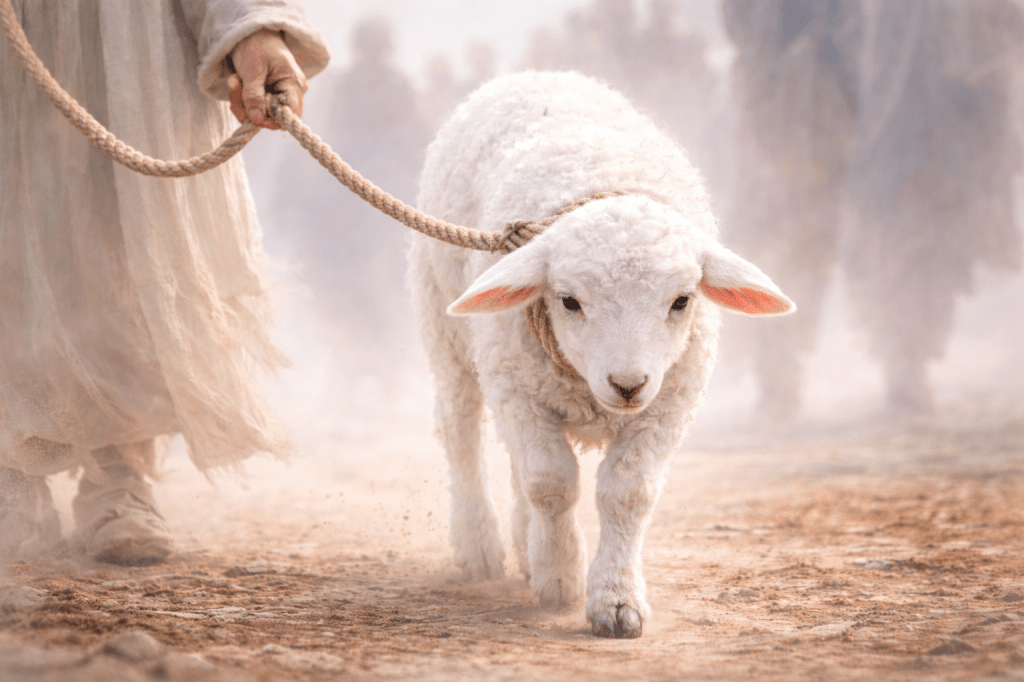
    He was led like a lamb to slaughter.

    Isaiah says something staggering in verse 10:

    “The LORD was pleased to crush Him.”

    Not pleased in cruelty. Pleased in purpose. The cross was not an accident of history. It was the outworking of a plan conceived before the foundation of the world.

    “If He would render Himself as a guilt offering…”

    That phrase reaches back into Leviticus. The guilt offering was brought when a wrong had been committed and restitution was required. Something had to bear the cost. Blood was shed because sin is not theoretical; it damages, it defiles, it incurs debt.

    “As a result of the anguish of His soul, He will see it and be satisfied.”

    Satisfied.

    The Father’s justice answered.
    The sinner’s debt paid.
    A people redeemed.
    Children adopted.
    The lost brought home.

    Revelation 22:17 says:

    “And the Spirit and the bride say, ‘Come.’ And let the one who hears say, ‘Come.’ And let the one who is thirsty come; let the one who wishes take the water of life without cost.”

    Without cost? Really? Well, without cost to us. And Jesus, who paid the cost, was satisfied in His work.

    Brennan Manning once told of visiting Yolanda, a 37-year-old woman dying of leprosy in Louisiana. Her body had been ravaged. Her husband had left. Her children did not visit. She was dying alone.

    Yolanda could not read. She had never read a Bible. To Manning’s knowledge, no one had ever read the Song of Solomon to her.

    But as he prayed over her, the room seemed filled with light, and her face shone, and she said: “I am so happy.”
    “Why?” he asked her.

    “The Abba of Jesus told me He would take me home today.”

    She described hearing: “Come now, my love… let me see your face… for your voice is sweet and your face is beautiful.”

    Six hours later, she was gone.

    Why was the Father pleased to crush His Servant?
    Why was the Servant satisfied in His anguish?

    Because through this sacrifice salvation could be offered “without cost” to anyone who would come.  After witnessing His sacrifice we are to see the Lamb’s invitation.

    “Come.”

    Will we do so?

    • Reflection:  Have you come to Him — not merely admired Him, not merely studied Him — but come?
    • Closing Prayer:  Lamb of God, You bore what was ours. You satisfied justice. You opened the way home. Give us eyes to see Your sacrifice, hearts to trust Your finished work, and courage to come as You call. Amen.
    • Read Isaiah 52:13-15; 53:1-3

    🌅MORNING— High and Lifted Up🪵

    • Focal Passage: Isaiah 52:13-15

    “Behold, My servant will prosper, He will be high and lifted up and greatly exalted. Just as many were astonished at you, My people, so His appearance was marred more than any man and His form more than the sons of men. Thus He will sprinkle many nations, Kings will shut their mouths on account of Him; For what had not been told them they will see, and what they had not heard they will understand.”

    In our Tree-to-Tree journey, some trees are landmarks. Today and tomorrow we stand before the tallest tree in the whole forest 🌳 —the cross 🪵 —seen not from the Gospels first, but from the heart of the Old Testament, where God speaks of His Servant with a strange, stunning sequence: exalted… then disfigured… then victorious.

    “Behold.” Don’t rush past that word. God is calling for attention. The Servant “will prosper”—not because He chases comfort, but because He acts with perfect wisdom and completes what the Father sent Him to do. Then the triple rise: “high and lifted up and greatly exalted.” Isaiah uses that kind of language of the Lord Himself elsewhere. This Servant does not merely reflect God’s glory—He bears it.

    And then, without warning, Isaiah takes you straight to the sight no one expects:

    “His appearance was marred more than any man.”

    The same Servant who is exalted is also disfigured. This is not a detour. This is the way. The crown and the wounds are woven together. Isaiah is preparing you for a victory that comes through suffering, not around it.

    Then verse 15 lands on a word with temple weight: “sprinkle.” In Leviticus, sprinkling is what blood does when sin must be dealt with and cleansing must be real. Isaiah is telling you that the Servant’s suffering is not meaningless brutality. It is purposeful. It reaches “many nations.” It silences kings. It changes what people can see and understand.

    And if you wonder whether you are worth such attention, consider a line recorded by psychiatrist Bessel van der Kolk. He once emailed a patient carrying memories of abuse and asked how she was doing. She wrote back that she was trying to remind herself she didn’t deserve what happened to her, and then she added words that ache and shine at the same time: she was holding like a treasure “the idea that I am worth being worried about by someone I respect and who does understand how deeply I am struggling right now.”

    Worth being worried about.

    If the concerned gaze of one human being can feel like treasure to a wounded soul, what does it mean that God looks on you with love strong enough to send His Servant to be marred—strong enough to pay, to cleanse, to bring you home?

    This morning begins where Isaiah begins: not with your ability to climb up to God, but with God’s Servant coming down for you. The cross should sober us—because it tells the truth about our sin. And it should steady us—because it tells the truth about His love: He bore the shame we deserved so we could come near without fear.

    • Reflection:  What would change in you today if you truly received this: in Christ, at great cost, God lavished His grace upon you?

    🌆EVENING— Not Esteemed 🌱

    • Focal Passage: Isaiah 53:1-3

    “Who has believed our message? And to whom has the arm of the LORD been revealed? For He grew up before Him like a tender shoot, and like a root out of parched ground; He has no stately form or majesty that we should look upon Him, nor appearance that we should be attracted to Him. He was despised and forsaken of men, a man of sorrows and acquainted with grief; and like one from whom men hide their face He was despised, and we did not esteem Him.”

    Isaiah now tells the truth we tend to avoid: the Servant is not only wounded—He is unwanted.

    “Who has believed our message?” The tragedy is not that God was silent. The tragedy is that the message was heard and dismissed. “To whom has the arm of the LORD been revealed?” God’s saving strength was present, but it did not look the way people demanded. They wanted spectacle. They wanted obvious dominance. They wanted the kind of power that makes everyone step back.

    Instead, God’s strength arrived like a “tender shoot” 🌱, like “a root out of parched ground.” Life where you would not expect it. Hope growing in hard soil.

    And the Servant does not come packaged with the usual human magnets—no “stately form,” no “majesty,” nothing that flatters our instincts for the impressive. Isaiah is not criticizing beauty; he is exposing the way our hearts often work. We are drawn to shine. We are slow to recognize glory when it comes clothed in humility.

    Then the line that stings: “we did not esteem Him.”

    We can read that as history, and it is. But it is also a mirror. The question is not only what Jerusalem did. The question is what we do—when Christ asks for trust, when He calls for surrender, when He speaks truth into our habits, when He presses on what we protect.

    Yet here is the comfort hidden inside the rejection: He knows this pain from the inside. “Despised and forsaken.” “Acquainted with grief.” Not observing sorrow from a distance, but walking through it. If you have ever felt brushed aside, overlooked, treated as unnecessary, or left carrying a grief others don’t know how to hold—Isaiah says the Servant has stood where you stand.

    And He did not turn back.

    This is why the tallest tree 🪵 matters so much. It tells you that God did not love you with a concept. He loved you with a Person. And that Person entered our rejection so He could bring us into His acceptance.

    Tonight, you do not have to pretend you’re unhurt. You do not have to prove you’re impressive. You can come to the Servant exactly as you are—and find Him faithful and near.

    • Reflection:  What does your heart tend to “esteem” as impressive—and how is Jesus reshaping what you recognize as true glory?
    • Closing Prayer:  Father, thank You for the Servant who is high and lifted up, and yet was marred for our healing. Thank You that His blood truly cleanses and His victory reaches the nations. Forgive us for the ways we have failed to esteem Him, and open our eyes to see His glory in the cross 🪵. For the weary and rejected, draw near tonight with Your steady love. Hold us fast in Jesus. Amen.
    • Read Isaiah 42:1-9; 44:1-8

    🌅MORNING— Behold My Servant

    • Focal Passage: Isaiah 42:1-3

    “Behold, My Servant, whom I uphold; My chosen one in whom My soul delights. I have put My Spirit upon Him; He will bring forth justice to the nations. He will not cry out or raise His voice, Nor make His voice heard in the street. A bruised reed He will not break and a dimly burning wick He will not extinguish; He will faithfully bring forth justice.”

    We arrive at the first of Isaiah’s four Servant Songs (42:1–9; 49:1–6; 50:4–9; 52:13–53:12). Some see the servant as Israel. After all, Isaiah 41:8 calls Israel “My servant.” But Isaiah 42 introduces someone different.

    “Behold, My Servant.”

    The contrast is deliberate. In 41:29 the idols are “wind and emptiness.” Now God says, in effect, Look at Him instead.

    This Servant has the Spirit upon Him and brings justice to the nations. That echoes earlier promises — the Ruler of Isaiah 2 who judges between the nations, the Prince of Peace in Isaiah 9 whose government has no end, the Righteous Branch in Isaiah 11 upon whom the Spirit rests. This Servant sounds like that King.

    But He does not resemble the kings of Assyria. One Assyrian ruler boasted that he “snapped like a marsh reed” all who opposed him. This Servant does the opposite:

    “A bruised reed He will not break.”

    That image is not poetic decoration. A reed once bent is easy to finish off. A wick once smoldering is simple to extinguish. Yet this Servant protects what is fragile. He is strong enough to be gentle.

    Matthew tells us plainly that Jesus fulfilled this passage (Matthew 12:15–21). When opposition rose, He withdrew. He healed. He refused to crush those barely holding on. And yet — He “will faithfully bring forth justice.” Gentleness does not mean compromise. Compassion does not mean indifference to sin.

    How can someone be soft toward sinners and unyielding toward injustice? Isaiah will answer that in later Servant Songs. Justice will come, but it will come through suffering.

    Verse 4 says He “will not be disheartened or crushed.” The nation had already cried, “My way is hidden from the Lord” (40:27). This Servant will not waver. He will carry the mission to the ends of the earth.

    Then the Creator speaks directly to Him:

    “I will hold You by the hand…
    I will appoint You as a covenant to the people,
    As a light to the nations.”

    The Servant is not merely bringing a covenant. He is the covenant. He opens blind eyes. He releases prisoners from darkness.

    And God reminds Israel: “I am the LORD, that is My name; I will not give My glory to another.” In every generation there is pressure to dilute that claim. Surveys tell us that many who claim Christ no longer believe He is the only way. Isaiah will not allow such softness. There is no other Rock.

    • Reflection:  Have you truly beheld God’s servant, Jesus?  Who is both gentle toward the bruised and faithful in bringing justice?

    🌆EVENING— Willows By a Flowing Stream 🌳

    • Focal Passage: Isaiah 44:3-5

    “For I will pour out water on the thirsty land and streams on the dry ground; I will pour out My Spirit on your offspring and My blessing on your descendants; And they will spring up among the grass like poplars by streams of water. This one will say, ‘I am the LORD’S’; And that one will call on the name of Jacob; And another will write on his hand, ‘Belonging to the LORD,’ and will name Israel’s name with honor.”

    After introducing the Servant, Isaiah turns back to Israel with promise.

    Water on dry ground.
    Spirit on a spiritually dry people.
    Willows 🌳 (or poplars as in the above translation) growing beside flowing streams.

    The image is steady and strong. A willow 🌳 survives because its roots stay near water. It bends in storms but does not snap. It does not live off yesterday’s rain. It draws from a constant source.

    That is Isaiah’s picture of renewal.

    Verse 5 is striking. People openly identifying themselves with the Lord. Writing on their hands, “Belonging to the LORD.” Not embarrassed. Not diluted. Marked.

    God can restore a name.

    The world may define you by failure. You may carry regret or a reputation that lingers. But God writes a different word over His people: Mine. He does not merely forgive; He reclaims and replants.

    Then comes the declaration: “You are My witnesses” (44:8). Not first a command, but a reality. If the Servant has opened your eyes and brought you out of darkness, you are evidence that He lives.

    So the question becomes more direct.

    Are we rooted like a willow 🌳 by flowing streams — drawing life from Him? Or are we trying to survive on cultural approval and thin soil?

    “Is there any God besides Me, or is there any other Rock? I know of none.”

    The evening does not end with pressure but with grounding. The Servant has come. The Spirit is poured out. The Rock is secure. Your task is not to manufacture strength but to stay planted.

    Stay near the water.
    Let your roots go deep.
    Bear His name with honor.

    • Reflection:  Are you living like someone planted by the stream — nourished by Him — or like someone trying to survive on your own strength?
    • Closing Prayer:  Lord, thank You for Your Chosen Servant — gentle toward the bruised and faithful in justice. Pour Your Spirit on us like water on dry ground. Plant us like willows 🌳 by flowing streams. Write Your name over our lives so clearly that we stand as witnesses to Your power and grace. Through Jesus Christ, our covenant and our Rock. Amen.