• Read 1 Samuel 3

    MORNING— Learning to Listen

    • Focal Passage: 1 Samuel 3:9

    “Then Eli said to Samuel, ‘Go, lie down; and it shall be if He calls you, that you shall say, “Speak, LORD, for Your servant is listening.”

    The word of the LORD was rare in those days. Vision was infrequent. That is how this chapter begins—not with Samuel, but with the spiritual condition of Israel.

    God had not stopped speaking. His word had become uncommon because it was no longer welcomed.

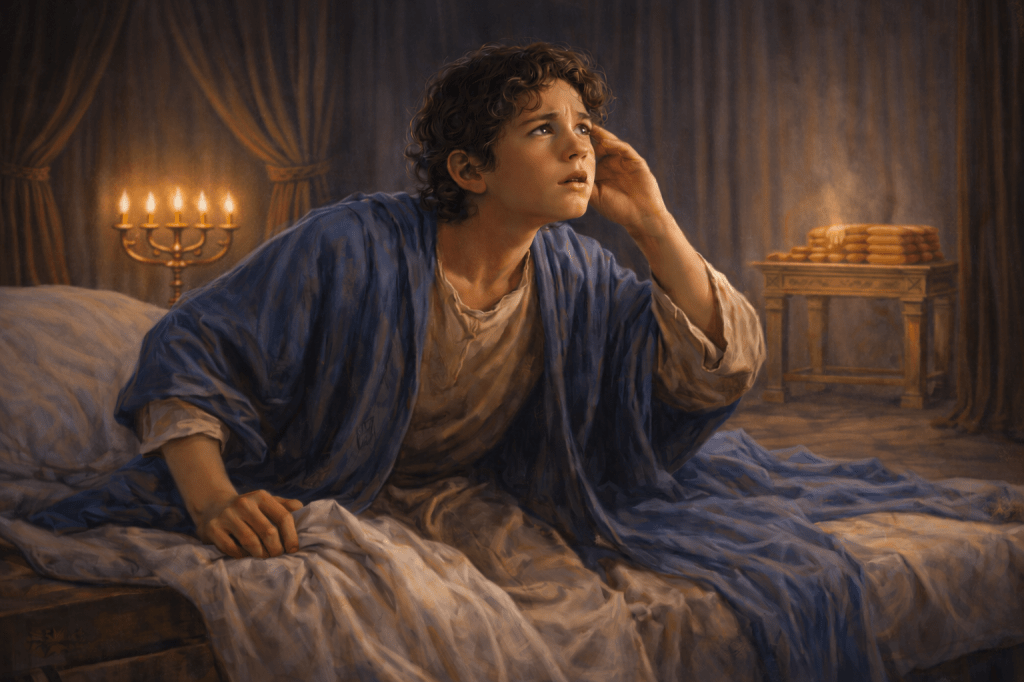
    Samuel is young. He serves in the tabernacle, but he does not yet know the LORD in a personal way. When God calls him in the night, Samuel assumes it must be Eli. That response is understandable. He has learned how to serve the priest—but he has not yet learned how to recognize the voice of God.

    When Eli finally realizes what is happening, he gives Samuel simple and life-shaping counsel: “Speak, LORD, for Your servant is listening.”

    The Hebrew word translated “listening” is shāmaʿ. It means more than hearing sound. It carries the idea of hearing in a way that leads to response. In Scripture, to truly hear God is to place oneself under His word, ready to receive what He says and to live accordingly.

    Samuel does exactly that. He listens without argument, without delay, and without condition.

    By the end of the chapter, the LORD is revealing His word through Samuel, and the text tells us that none of it fell to the ground. God entrusted His word to someone who was willing to listen rightly.

    • Reflection:  What might it look like for you to listen to the LORD with a heart ready to respond?

    EVENING— Hearing Without Turning

    • Focal Passage: 1 Samuel 3:18

    “So Samuel told him everything and hid nothing from him. And he said, ‘It is the LORD; let Him do what seems good to Him.”

    Eli hears the word of the LORD.

    That is what makes this moment sobering.

    Samuel faithfully reports everything God has said—about judgment, about the future, about Eli’s household. Eli does not interrupt. He does not dispute the message. He does not deny its truth.

    But he also does not change.

    His response sounds humble on the surface: “He is the LORD; let Him do what seems good to Him.” Yet it is not repentance. It is resignation. Eli accepts God’s verdict, but he does not turn from the path that led there.

    This is where the contrast of the chapter sharpens.

    Samuel listens and is shaped by what he hears.
    Eli listens and remains unchanged.

    In Hebrew thought, that is the difference between hearing and shāmaʿ—between sound reaching the ears and truth governing the life. God’s word was not rejected by Eli; it was simply allowed to pass through him without reforming him.

    The chapter closes with a decisive transition: “The LORD was with Samuel as he grew… and all Israel knew that Samuel was confirmed as a prophet of the LORD.” Leadership shifts. The future moves forward. God’s word continues—now entrusted to one who listens with his life.

    This passage asks an uncomfortable but necessary question: Is it possible to acknowledge God’s sovereignty while resisting His correction?

    Eli shows us that it is.

    Samuel shows us a better way.

    • Reflection:  When God’s word confronts you, does it merely inform you—or does it redirect you?
    • Closing Prayer:  Lord of Truth, teach me to listen when You speak.  Give me a heart that receives your Word with humility and a life that responds with my whole being.  Shape me by what You say, so I do not merely hear—but follow. Amen.
    • Read 1 Samuel 1; 2:1-11

    MORNING— The Lord of Hosts Hears

    • Focal Passage: 1 Samuel 1:11

    “She made a vow and said, ‘O Lord of hosts, if You will indeed look on the affliction of Your maidservant and remember me, and not forget Your maidservant, but will give Your maidservant a son…’”

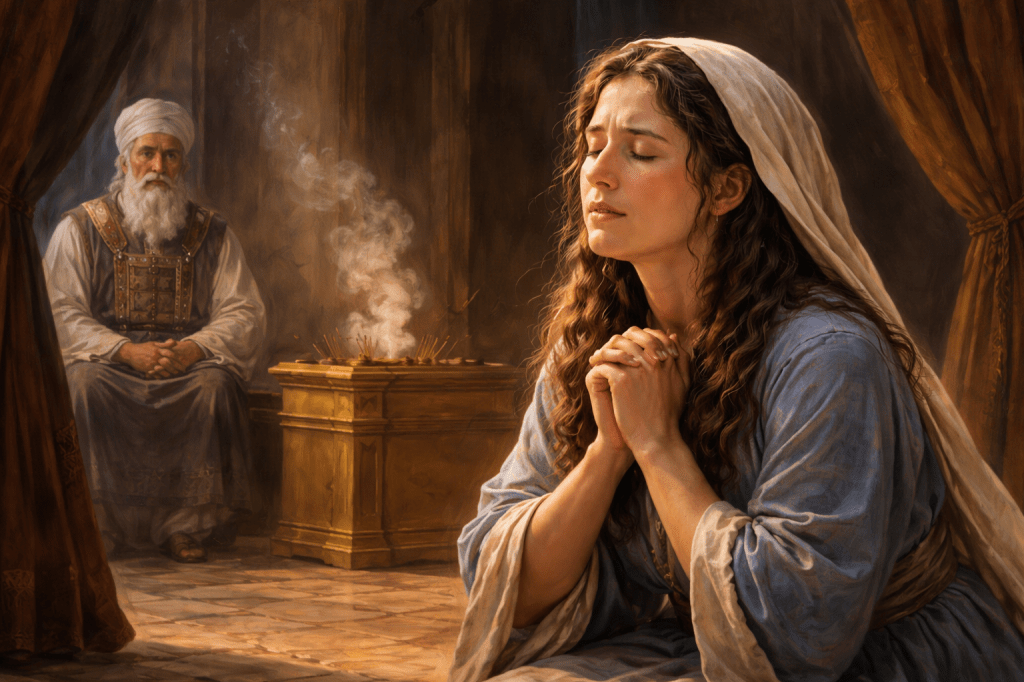
    The first time Scripture uses the name YHWH Tsaba—the LORD of Hosts—is not on a battlefield. It is whispered through tears.

    Hannah stands at the threshold between the chaos of the Judges and the dawn of kingship in Israel. The nation is disordered. Worship is hollow. Leadership is weak. And in the midst of that instability, a barren woman prays.

    “Hosts” (tsaba) is a word of armies, angels, and vast multitudes. It can describe soldiers in formation, the heavenly beings who serve God, or even the stars scattered across the sky. To call God the LORD of Hosts is to confess that every power—visible or invisible—stands under His command.

    Hannah chooses this name deliberately. Her struggle is deeply personal, but she brings it to the God who rules all forces. What oppresses her is not beyond His reach. What shames her is not outside His authority.

    Scripture does not tell us how long Hannah prayed—only that she prayed honestly, intensely, and without restraint. She poured out her soul. And when she rose from prayer, something had changed. The circumstances had not. But she had. “Her face was no longer sad.”

    She did not leave with an answer. She left with peace.

    That is often the gift of the LORD of Hosts—not immediate resolution, but the assurance that the battle no longer rests on our shoulders alone.

    • Reflection:  What personal struggle do you need to place under the authority of the LORD of Hosts today?

    EVENING— Joy Given Back to God

    • Focal Passage: 1 Samuel 2:8

    “He raises the poor from the dust, He lifts the needy from the ash heap to make them sit with nobles and inherit a seat of honor.”

    Hannah returned home, worshiped, and lived faithfully in the ordinary days that followed. She trusted the LORD of Hosts not only with her request, but with the timing of His answer. And in time, God remembered her.

    Hannah’s waiting ends with receiving—but her story does not stop there. When the Lord gives, Hannah does not cling. She responds with joy that is turned upward in praise.

    Her song in 1 Samuel 2 is not a lullaby whispered over a child. It is a bold confession about God Himself. She rejoices not only because she has received a son, but because she has come to know the Lord more truly. The God who once seemed silent is revealed as the One who overturns human expectations, who lifts the lowly, and who delights to give life where there was none.

    Joy, for Hannah, is not mere relief. It is recognition. She sees now that the Lord was at work all along—and that realization becomes worship.

    In 1738, Charles Wesley recorded that after his conversion experience at Aldersgate, he did not immediately feel triumphant. Instead, he wrote hymns—many of them during seasons of lingering doubt and weakness. Over his lifetime, he would write more than 6,000 hymns, including “And Can It Be” and “O for a Thousand Tongues to Sing.”  Wesley later reflected that song was not merely the result of joy, but one of the means God used to shape it.

    Receiving from the Lord is never meant to end with us. Joy matures when it is returned to God in praise.

    Hannah’s song reminds us that God’s gifts are not merely answers to prayer—they are invitations to deeper worship.

    • Reflection:  What gift from God are you being invited to receive with joy—and then return to Him in praise?
    • Closing Prayer:  LORD of Hosts, teach us to praise You not only after You answer, but while we are still waiting.  Let our worship shape our hearts, steady our faith, and remind us who You are when circumstances remain unresolved. Lift the lowly in Your time, and form in us a song to sing to the generations that follow.  Amen.
    • Read Ruth 3 & 4

    MORNING— Under His Covering

    • Focal Passage: Ruth 3:9

    “I am Ruth your maid. So spread your covering over your maid, for you are a close relative.”

    Years ago, sociologists studying long-lasting marriages noticed something surprising. The strongest predictor of stability was not passion, compatibility, or even shared interests. It was character—especially the presence of restraint, reliability, and moral consistency in moments of vulnerability. When trust was required, character mattered more than chemistry. Boaz possessed that kind of character.

    Earlier, Boaz had blessed Ruth for seeking refuge “under the wings” of the Lord. Now Ruth uses the same language when she asks Boaz to “spread your covering” over her.

    What happens in chapter 3 is not a romantic encounter. She is asking for protection. For covenant responsibility. For a future secured by righteousness rather than chance.

    God had promised to be a covering for Naomi and Ruth. In this moment, Boaz becomes the means by which God keeps that promise. By agreeing, Boaz accepts a God-given responsibility—to stand between Ruth and uncertainty, between Naomi and loss, and between this family and the loss of its name and future. His faith becomes shelter for others.

    That is the quiet strength of a righteous man. Boaz does not exploit vulnerability. He honors it. He refuses shortcuts. He chooses what is right, even when no one would have known if he had chosen otherwise.

    Ruth rests at peace because she has encountered something rare: faith expressed through restraint, power governed by righteousness, and character strong enough to be trusted with another person’s future.

    • Reflection:  Where might God be calling you to become a covering for someone else—not through control, but through faithfulness?

    EVENING— A Redeemer and a Happy Ending

    • Focal Passage: Ruth 4:14

    “Blessed is the Lord who has not left you without a redeemer today.”

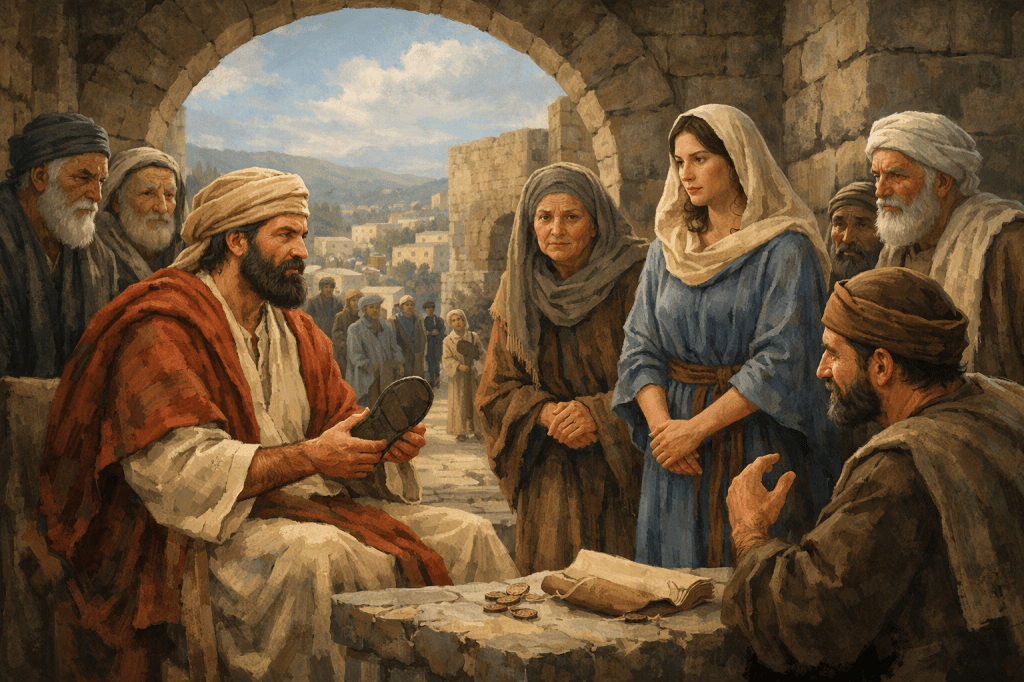
    The question of redemption is settled in the open at the city gate. Witnesses gather. Names are spoken. A price is named. Another man could have redeemed Ruth, but when the cost became clear, he stepped away. Redemption would complicate his inheritance. Boaz did not step back.

    He willingly binds his future to Ruth’s past and Naomi’s loss. He pays the price publicly, lawfully, and without hesitation. Boaz is a Christ figure in the Old Testament, a living preview of what redemption looks like when someone bears the cost so others may live.

    Jesus is our Kinsman Redeemer. By sharing our flesh, He entered our family line so that He could redeem us—freeing us from sin’s claim and restoring us to God’s promised inheritance.

    And redemption does not stop with Ruth.

    Naomi’s story turns. The woman who once said, “The Lord has brought me back empty,” now holds a child in her arms. What death and famine stripped away, God has returned in life. The family line is preserved. The future is secured.

    Obed is born.
    Then Jesse.
    Then David.

    From suffering comes a line that will one day bear the Redeemer Himself.

    We are most like Christ when we participate in that work—when we redeem what is broken. Not things, but people. When we love with a costly love that bears, believes, and endures. That kind of love never fails.

    • Reflection:  Who might God be inviting you to love redemptively, even when the cost is real?
    • Closing Prayer:  Redeeming God, thank You for covering us when we were vulnerable and restoring us when hope seemed thin.  Teach us to trust Your timing, to choose faithfulness over ease, and to love with the kind of love that redeems.
      Amen.
    • Read Ruth 1 & 2

    MORNING— Call Me Bitter

    • Focal Passage: Ruth 1:20-21a

    “She said to them, ‘Do not call me Naomi; call me Mara, for the Almighty has dealt very bitterly with me. I went out full, but the Lord has brought me back empty.’”

    If you were asked to teach a class at church on the subject of romance, where would you go in the Bible?

    Song of Solomon? Perhaps—until the poetry requires a translator.
    First Corinthians 13? Beautiful, but brief, and maybe a little too lofty.

    Then you come to Ruth.

    At first, it feels like the wrong choice. This story doesn’t sound romantic at all. There are funerals instead of weddings, hunger instead of abundance, tears instead of music.  It doesn’t sound like any love story you’ve heard before.
    And yet, underneath the sorrow and the waiting, Ruth is exactly like every real love story you’ve ever known.

    And it isn’t a “sweep you off your feet” kind of romance.  It is about committed love and loyalty.

    And overall the short book is not really about Ruth.

    The Book of Ruth could just as well be called The Book of Naomi. It is about her relationship with God being tested.

    Naomi has lost everything. A famine forced her family from Bethlehem. Death followed her into Moab. Her husband is gone. Her sons are gone. The future she imagined is gone. And now she returns home with nothing but grief and a foreign daughter-in-law beside her.

    Bitterness grows, fed by disappointment.

    Naomi’s words reveal what grief has done to her faith. She still believes in God, but she believes He is against her. “The hand of the Lord has gone forth against me,” she says. She knows the old stories—seas that parted, walls that fell—but pain has drowned them out.

    People who are hurting often expect nothing from life except more hurt. They become blind to blessing.

    “Do not call me Naomi,” she says. Pleasant no longer fits. “Call me Mara.” Bitter.

    And then she says the most painful thing of all: “I went out full, but the Lord has brought me back empty.”

    Standing right beside her is Ruth—who has given up her homeland, her gods, her future, and her security to stay with her. Yet grief makes Naomi unable to see the gift God had already placed in her life.

    Bitterness narrows our vision until sorrow is all we can see.

    But even here—before Naomi can see it—God has begun his work.

    • Reflection:  Where has disappointment begun to shape how you speak about God?  Is grief telling you a story that grace has not yet finished correcting?

    EVENING— Gleanings of Hope

    • Focal Passage: Ruth 2:12

    “May the Lord reward your work, and your wages be full from the Lord, the God of Israel, under whose wings you have come to seek refuge.”

    Hope arrives in ordinary places, through faithful people who simply keep going.

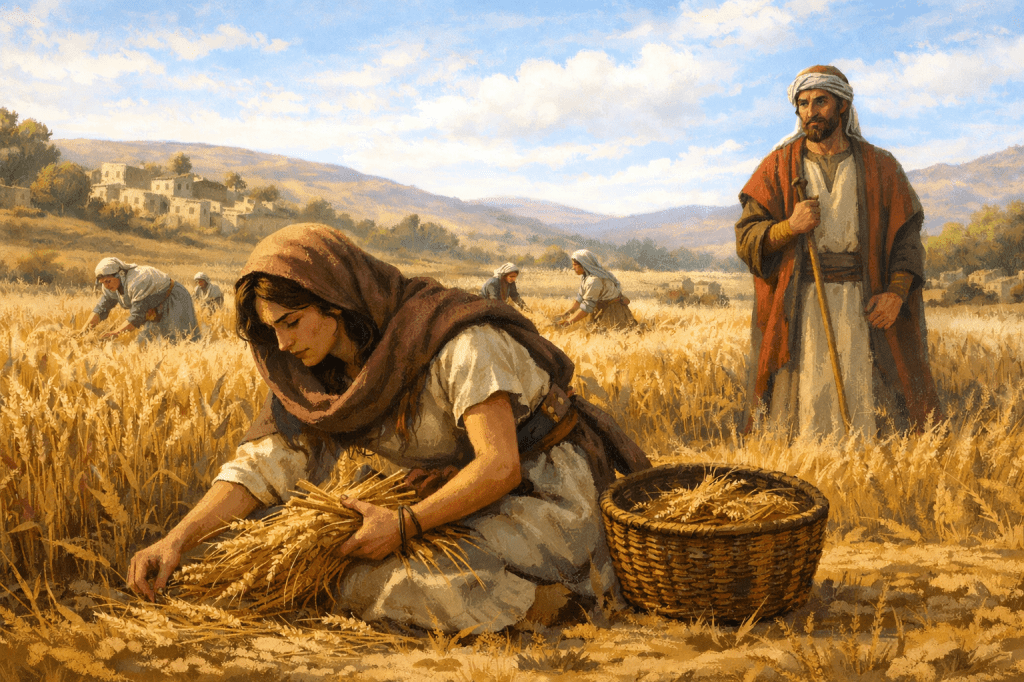
    Ruth does not wait for a sign from heaven before she acts. She asks permission to glean, then goes to work. She does not know whose field she enters. Scripture only says she “happened” to come to Boaz’s land. Providence usually feels like coincidence until later.

    Ruth works all day. She stops only briefly to rest. She gathers enough grain to feed two women who have no safety net and no guarantees. She does not complain. She does not keep score. She does not ask what she will get in return.

    That is loyal love.

    Boaz notices—faithfulness tends to reveal itself. He protects her, provides for her, and speaks kindly to her. Ruth receives it with humility, never assuming she deserves more.

    And something unexpected happens.

    Naomi begins to hear the music.

    When Ruth returns with grain—and leftovers from Boaz’s table—Naomi finally asks a question that signals hope’s return: “Where did you glean today?” The woman who said she came back empty now recognizes that something good has found its way into her hands.

    “May he be blessed of the Lord,” Naomi says, and for the first time, she speaks of God’s kindness instead of His affliction.

    Hope does not erase sorrow. It interrupts it.

    Sometimes hope looks like work done faithfully when life feels unfair.
    Sometimes it looks like humility that receives grace without entitlement.
    And sometimes hope sounds like music you can barely hear—but you strain to listen anyway.

    A chaplain once sang a hymn beside a woman who had been unresponsive for years after a brain stem stroke. Nothing had reached her—no voice, no touch, no treatment. But when the words “Great is Thy Faithfulness” were sung, something stirred. Sounds came from deep within her. The song reached places untouched by everything else.

    Faith, it turns out, has roots deeper than memory.

    So do hope and love.

    • Reflection:  What kindness might God be using right now to remind you that He has not withdrawn His care?  Where are the small gleanings of hope you might be overlooking?
    • Closing Prayer:  Faithful God, when sorrow tempts us toward bitterness, steady our hearts.  Help us trust You when the way feels uncertain, and open our eyes to the gifts You place beside us.  Teach us to love faithfully, receive humbly, and hope patiently.
      Amen.
    • Read Judges 16; 21:25

    MORNING— Strength Undone

    • Focal Passage: Judges 16:17

    “So he told her all that was in his heart and said to her, ‘A razor has never come on my head, for I have been a Nazirite to God from my mother’s womb. If I am shaved, then my strength will leave me and I will become weak and be like any other man.’”

    Samson did not fall all at once.

    His collapse came slowly—through repeated compromises, blurred boundaries, and a growing confidence that consequences would never fully catch him. He had walked away from calling before he ever lost his strength.

    Judges 16 is not simply the story of Delilah’s betrayal. It is the story of a man who kept returning to what God had warned him against—and convinced himself that his gifts could carry him where his obedience would not.

    Three times Delilah presses him. Three times he toys with the truth. Each time, the danger grows clearer. And still Samson stays. The tragedy is not that Delilah was persistent. The tragedy is that Samson was careless with what was sacred.

    When he finally reveals the truth, Scripture says, “he told her all that was in his heart.” That phrase lands heavily. The problem was not merely the razor. It was that Samson had already given away his heart long before his hair was cut.

    The strength that once tore lions apart and broke iron gates could not protect him from himself.

    Tragically—this most haunting line falls afterward:

    “He did not know that the LORD had departed from him.” (Judg. 16:20)

    Loss is most dangerous when it goes unnoticed.

    • Reflection:  Where might familiarity with God’s gifts be dulling your awareness of God’s presence? What sacred trust needs renewed guarding?

    EVENING— When Strength Returns

    • Focal Passage: Judges 16:28

    “Then Samson called to the LORD and said, ‘O Lord GOD, please remember me and please strengthen me just this time, O God…’”

    Samson’s story does not end in seduction—it ends in humiliation.

    His eyes are gouged out. His strength is gone. He is made sport for his enemies. The man who once stood alone now leans on a pillar. But something has changed.

    For the first time in the narrative, Samson prays—not in confidence, not in bravado, but in desperation. Blind, bound, and broken, he finally looks upward. And quietly, almost easily overlooked, Scripture notes: “However, the hair of his head began to grow again…” (Judg. 16:22)

    God was not finished.

    Samson’s final act brings deliverance, but it is costly. His life ends as it began—marked by strength—but now shaped by humility. His victory is real, but it is not triumphant. It is tragic grace.

    Judges does not rise after Samson.

    It continues to unravel—morally, spiritually, socially. Leaders grow weaker. Violence grows darker. Worship grows confused. By the end of the book, the refrain has become unmistakable:

    “In those days there was no king in Israel; everyone did what was right in his own eyes.” (Judg. 21:25)

    That final verse is not merely a summary—it is a signal. Israel needs more than stronger judges. It needs a faithful King. One who will not misuse strength. One who will not be undone by desire. One who will not abandon His calling.

    Judges ends by looking forward—waiting.

    • Reflection:  Where do you see the limits of human strength in your own life—and how might God be using that awareness to deepen your dependence on Him?
    • Closing Prayer:  Almighty God, guard our hearts where strength alone cannot.  When we grow careless with what is sacred, call us back. Where we are weak, remind us that You are not finished.  Teach us to long not for our own power, but for Your faithful rule in our lives.
      Amen.
    • Read Judges 9:1-21

    MORNING— The Thornbush King 🌳

    • Focal Passage: Judges 6:12

    “Finally all the trees 🌳said to the bramble, ‘You come, reign over us!’ The bramble said to the trees🌳, ‘If in truth you are anointing me as king over you, come and take refuge in my shade; but if not, may fire come out from the bramble and consume the cedars of Lebanon🌳.’”

    Jotham is the youngest son of Gideon.

    He is also the only one left alive.

    After Gideon’s death, Abimelech seizes power by murdering his seventy brothers on a single stone. Jotham escapes—not because he is strong or influential, but because God preserves a witness. And when the men of Shechem crown Abimelech king, they do so beside the oak🌳 of the pillar in Shechem—a place long associated with covenant promises and renewal (Gen. 12:6–7; Gen. 35:4; Josh. 24:26).

    Trees🌳 matter here.

    An oak 🌳once linked to promise, repentance, and covenant commitment now becomes the backdrop for betrayal and bloodshed. Beneath that tree🌳, Shechem chooses a king God did not appoint.

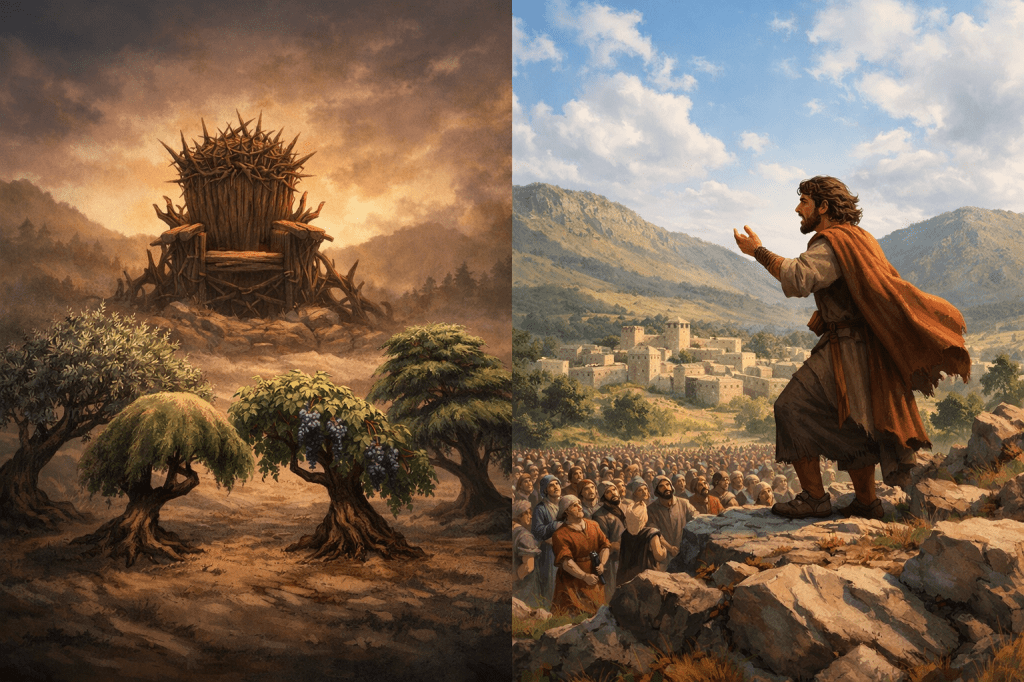
    Jotham does not gather an army. He climbs Mount Gerizim and tells a story.

    This moment is striking. For the first time in Scripture, truth is delivered through a parable—anticipating a way of speaking God will later use through the prophets and, ultimately, in the teaching of Jesus. The story allows truth to confront its hearers before they realize they themselves are being addressed.

    In the parable, the trees🌳 seek a ruler. The olive refuses—it will not abandon its richness. The fig 🌳declines—it will not forsake its sweetness. The vine will not leave the joy it provides. Only the bramble accepts.

    A thornbush offers no fruit. No shelter. It cannot nourish or protect. It injures and is easily consumed by fire. And yet it promises refuge it cannot provide.

    “Come, take refuge in my shade.”

    The irony would have been unmistakable. No bramble can shelter a cedar🌳 of Lebanon. Jotham’s story exposes not only Abimelech’s ambition, but the character of the man who grasped for power through violence and fear.

    The thornbush becomes a mirror for Abimelech.

    • Reflection:  Where might you be tempted to accept harsh or hollow leadership—spiritually or practically—simply because it promises security or control?

    EVENING— When the Fire Comes Down

    • Focal Passage: Judges 9:20

    “But if not, let fire come out from Abimelech and consume the men of Shechem and Beth-millo; and let fire come out from the men of Shechem and from Beth-millo, and consume Abimelech.”

    Jotham’s parable does not end gently.

    It ends with a warning.

    If Abimelech’s rule has been established in truth and integrity, then let there be joy. But if it has been built on violence, betrayal, and pride, then fire will come—and it will not burn in only one direction.

    Judges does not leave this unresolved.

    Abimelech eventually turns on the very people who crowned him. Cities are destroyed. Trust collapses. Bloodshed multiplies. And finally, the thornbush king meets an inglorious end—crushed by a millstone dropped from a tower by a nameless woman.

    Even then, Abimelech is still trying to manage the story. Mortally wounded, he orders his armor-bearer to kill him so that it will not be said a woman struck him down (Judg. 9:54).

    The effort fails.

    Scripture remembers him exactly as he was—a ruler who grasped for power, brought destruction on others, and could not escape the consequences of his choices.

    The fire comes just as Jotham warned.

    Leadership rooted in self-interest consumes both the ruler and the ruled. Choices made in pride rarely remain contained. They spread. They scorch.

    Judges 9 leaves us with a sobering truth: when people organize life around their own desires rather than God’s will, they often end up ruled by what can only harm them.

    • Reflection:  Where might patterns of control or self-interest in your life eventually harm both you and others? How might God be inviting you to embrace the way of humble, servant-hearted leadership instead?
    • Closing Prayer:  Faithful God, give us ears to hear when truth comes wrapped in story.  Guard us from choosing what promises refuge but delivers harm.  Teach us to value fruit over force, faithfulness over ambition, and Your wisdom over our pride.
      Amen.
    • Read Judges 6:11-24; 7:15-23

    MORNING— O Valiant Warrior?

    • Focal Passage: Judges 6:12

    “The angel of the LORD appeared to him and said to him, ‘The LORD is with you, O valiant warrior.’”

    Seven years of oppression had reshaped Israel’s life. The Midianites did not conquer cities—they crushed confidence. When harvest time came, they waited until crops were nearly ready, then swarmed the fields and destroyed everything. Israel did not defeat the enemy; they adapted by hiding. Caves replaced homes. Fear replaced faith.

    It is in that setting that the angel of the LORD finds Gideon.

    Not on a battlefield—but crouched in a winepress, secretly beating out grain so it would not be taken. The greeting feels almost ironic. God calls him “a valiant warrior,” while the text shows us a man hiding, complaining, and doubting.

    Gideon is the son of Joash the Abiezrite, whose household will soon be exposed as deeply compromised by Baal worship. Gideon voices frustration with Yahweh—“Where are all His miracles?” (v. 13). He insists he is insignificant and asks God to send someone else. He even requests a sign.

    And yet God does not withdraw the title.

    Why? Because God does not name us only by what we are. He names us by what He intends to make of us.

    Scripture gives us this pattern again and again. God sees a persecutor named Saul and calls him Paul, apostle to the nations. He sees Moses—displaced, forgotten, tending someone else’s flocks—and calls him deliverer. He sees Gideon hiding in fear and calls him mighty.

    This is not flattery. It is formation.

    God’s promise comes before Gideon’s courage: “Surely I will be with you” (Judg. 6:16). The presence of the LORD—not Gideon’s strength—will define the outcome.

    Whoever your parents were. Whatever your self-image may be. However weak your faith feels right now. God still sees what you could become in His hands.

    • Reflection:  Do you stop to ask who God is calling you to become, or do you continue to define yourself by what others have called you?

    EVENING— Worship Before the Victory

    • Focal Passage: Judges 7:15

    “When Gideon heard the account of the dream and its interpretation, he bowed in worship.”

    By the time we reach Judges 7, Gideon has grown—but God continues shaping his faith. Before the battle begins, the Lord does something unexpected: He reduces the size of his army.

    From thousands to hundreds. From apparent strength to undeniable weakness.

    God explains His purpose clearly: “The people who are with you are too many… otherwise Israel would become boastful, saying, ‘My own power has delivered me.’” (Judg. 7:2)

    God is not interested in victories that confuse the source of glory.

    After the army is reduced to three hundred, God gives Gideon one final reassurance. He allows him to overhear an enemy soldier describing a dream that foretells Midian’s defeat. Gideon’s response is striking—he worships before the battle is fought.

    Worship before victory is an act of trust. It acknowledges that God’s promise is already at work, even when circumstances still feel impossible. From that place of worship, Gideon finally speaks with authority: “Arise, for the LORD has given the camp of Midian into your hands.”

    The strategy ensures that no one can misinterpret the outcome. Trumpets, torches, and shattered jars create panic. Confusion spreads. The enemy turns on itself.

    When the battle ends, there is no room for boasting. God has done exactly what He said He would do.

    This is how the Lord often works. He reduces what we rely on so that gratitude replaces pride. He trains His people not only to ask for help—but to give Him glory.

    Tonight, Gideon’s story asks us a crucial question: when God comes through, who receives the credit?

    • Reflection:  How can you intentionally give God glory for the victories—large or small—in your life?
    • Closing Prayer:  Lord of Hosts, You see us clearly—not only as we are, but as You are shaping us to be.  Teach us to trust You when our strength is reduced, to worship You before the outcome is visible, and to give You the glory when victory comes.  Through Christ our Deliverer,
      Amen.
    • Read Judges 4-5

    MORNING— Deborah Beneath the Palm 🌴

    • Focal Passage: Judges 4:4-5

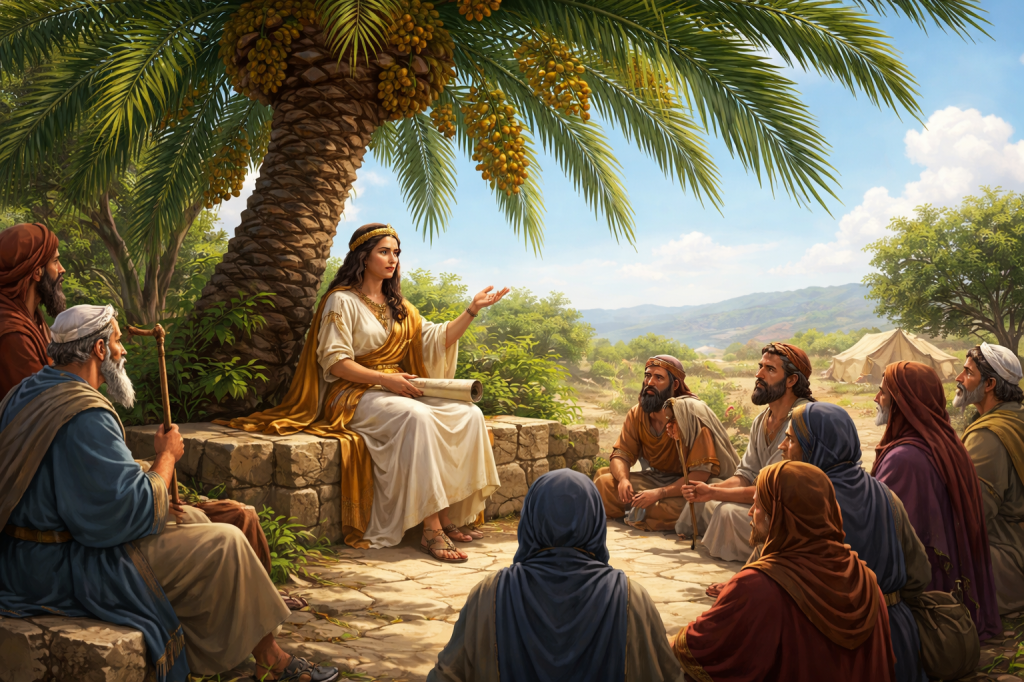
    “Now Deborah, a prophetess, the wife of Lappidoth, was judging Israel at that time. She used to sit under the palm tree 🌴 of Deborah between Ramah and Bethel in the hill country of Ephraim; and the sons of Israel came up to her for judgment.”

    Israel is once again trapped in the downward spiral that defines the book of Judges—oppression, fear, and a fractured spiritual life. Jabin’s iron chariots dominate the land, and Sisera’s cruelty has persisted for twenty years. When the people cry out, God does not immediately raise a warrior. He raises a listener.

    Deborah judges beneath a palm tree. 🌴

    This detail matters. Palms in Scripture often symbolize uprightness and flourishing life in harsh conditions: “The righteous man will flourish like the palm tree” (Psalm 92:12). Unlike massive oaks that dominate a space, palms are visible from a distance and associated with shade, refreshment, and life along traveled paths.

    Her “office” is not hidden. It is public, open, and accessible—located between Ramah and Bethel, between places already heavy with covenant memory. Deborah does not summon Israel to her. They come to her. Wisdom is not barricaded; it is offered.

    This tells us something essential about godly leadership. Deborah does not rule from isolation or intimidation. She places herself where God’s people already travel—where they can approach, ask, listen, and be corrected. Her authority flows not from position, but from proximity to God and faithfulness to His word.

    In a time when Israel’s leaders are often reactive or absent, Deborah’s steadiness stands out. She hears the Lord and speaks clearly—even when that word calls Barak to step beyond his fear. God’s guidance comes not with thunder, but with clarity beneath the palm.

    Ultimately, this points us forward. Christ too would teach in accessible places—on hillsides, along roads, beneath open skies. And one day, Revelation tells us, the redeemed will stand with palm branches in their hands, celebrating the final victory of the Lamb (Rev. 7:9).

    • Reflection:  Have you made yourself available where God can use you—or have you placed wisdom somewhere difficult for others to reach?

    EVENING— A Victory of Volunteers

    • Focal Passage: Judges 5:1-2

    “Then Deborah and Barak the son of Abinoam sang on that day, saying, ‘That the leaders led in Israel, that the people volunteered, Bless the LORD!”

    Judges 5 is not just a victory song—it is a theological evaluation. Deborah and Barak sing not about tactics or weapons, but about willing hearts. Some tribes answered the call. Others hesitated, debated, or stayed behind. The song names both obedience and omission.

    The palm beneath which Deborah judged now becomes the backdrop to a nation tested by response. Hearing God’s word is never the final step. Faith must eventually rise and move.

    What makes this victory remarkable is how God chooses to complete it. Sisera is not defeated by Barak’s sword but by Jael—an outsider, unexpected, uncelebrated. God’s deliverance again refuses human predictability. He works through the willing, not merely the powerful.

    The song ends with a prayer that reaches beyond the moment:

    “But let those who love Him be like the rising of the sun in its might.” (Judg. 5:31)

    That image echoes the palm—upright, enduring, fruitful under pressure. God desires a people who do not merely survive cycles of faithfulness, but grow brighter over time.

    Christ fulfills this hope. He not only calls His people to follow—He empowers them to do so. Through His cross, He breaks the cycle of fear. Through His resurrection, He forms a willing people. Through His Spirit, He leads hearts from listening to obedience.

    Deborah does not manipulate Barak.
    She does not shame him.
    She simply places God’s word in front of him and asks the question every believer must eventually face:  “Has not the LORD, the God of Israel, commanded…?” (Judg. 4:6)

    When God speaks clearly, will we remain seated—or will we rise?

    • Reflection:  Is there some activity you feel God is drawing you toward?  Is today the day to volunteer?
    • Closing Prayer:  Lord, thank You for meeting Your people in open places—
      for wisdom that is near, not hidden.  Teach us to listen faithfully, to respond willingly, and to stand upright like the palm
      🌴, rooted in obedience and trust.  Through Christ, form us into a people who rise when You call and flourish for Your glory.
      Amen.
    • Read Judges 2

    MORNING— A Downward Spiral

    • Focal Passage: Judges 2:10

    “All that generation also were gathered to their fathers; and there arose another generation after them who did not know the LORD, nor yet the work which He had done for Israel.”

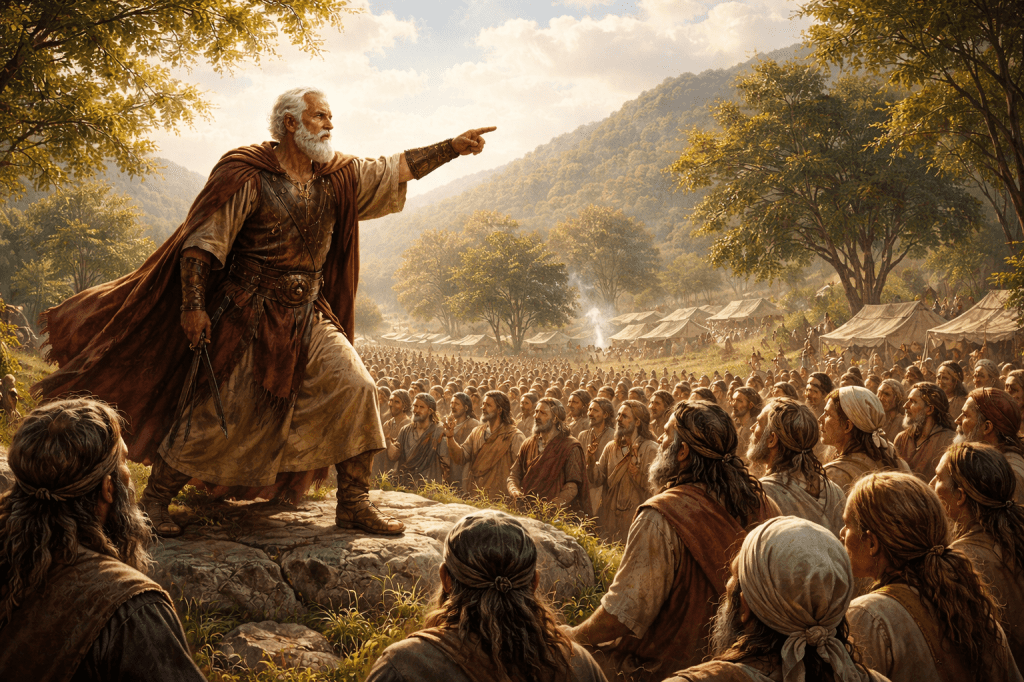
    Joshua dies.

    There is no final speech recorded in Judges, no dramatic farewell scene. Judges simply tells us that he is gathered to his fathers—and then something more troubling follows.

    A generation arises that does not know the LORD.

    This does not mean they had never heard His name. It means they had no living memory of His works. What had once been experienced firsthand was now secondhand. Stories were remembered, but conviction was not formed.

    Judges 2 explains what happens next. Israel forgets. They drift. They adopt the practices of the nations around them. The people who once lived in cities they did not build and ate from vineyards they did not plant now assume those blessings as normal.

    Memory fades quietly.

    The danger here is not rebellion at first—it is neglect. The people do not wake up one day deciding to abandon God. They simply stop paying attention. Faith is inherited in name, but not practiced in life.

    This is why Joshua pressed the people so hard to remember. This is why he set up stones. This is why he made them choose.

    Judges 2 shows us how quickly spiritual amnesia can take hold when faith is no longer taught, modeled, and lived within a generation.

    • Reflection:  What truths about God’s work in your life need to be actively remembered and passed on, rather than assumed?

    EVENING— A Cycle WE Know Too Well

    • Focal Passage: Judges 2:18-19

    “When the LORD raised up judges for them, the LORD was with the judge and delivered them… for the LORD was moved to pity by their groaning under those who oppressed them.  But it came about when the judge died, that they would turn back and act more corruptly than their fathers…”

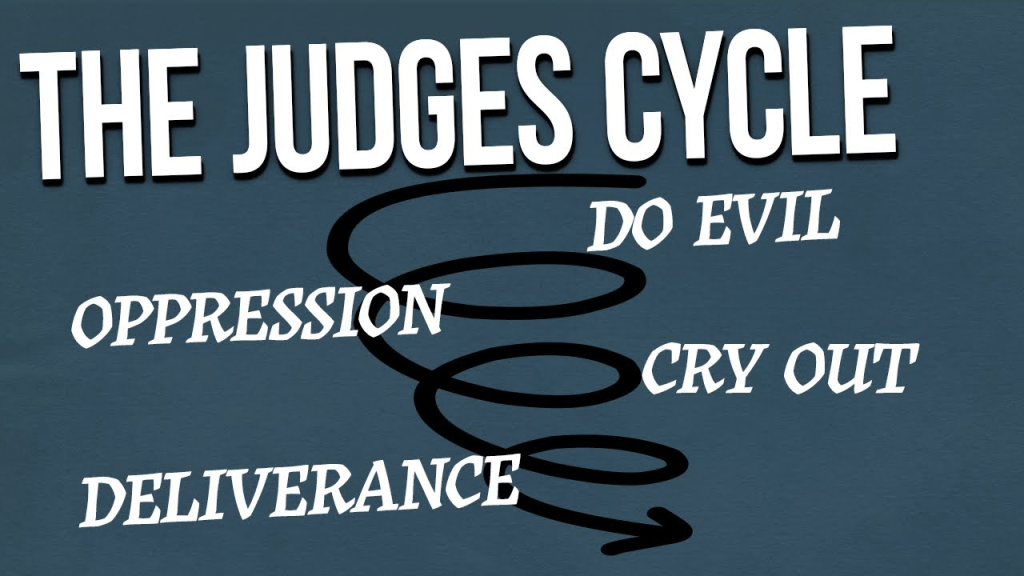
    Judges 2 pulls back the curtain and shows us the pattern that will define the entire book.

    The people forget the LORD.
    They turn to other gods.
    They suffer the consequences. (Subjugation by foreign nations.)
    They cry out.
    God raises up a deliverer in the form of a judge.
    There is rest—for a while.

    And then it begins again.  Only the next cycle begins with an even more corrupt nation.

    The cycle is exhausting to read—and painfully familiar to live.

    What stands out is not Israel’s faithfulness, but God’s compassion. Each time the people cry out, God responds. Not because they deserve it, but because He is moved by their suffering. Mercy interrupts judgment again and again.

    Judges are temporary saviors. They rescue, but they cannot transform the heart. Each deliverer dies, and the cycle resumes—often worse than before.

    The New Testament helps us understand why.

    Paul writes, “For the good that I want, I do not do, but I practice the very evil that I do not want” (Romans 7:19). The problem is not lack of rescue—it is the need for a deeper deliverance.

    Judges points us toward the longing for a Savior who does more than deliver from enemies—One who rescues from sin itself. Where judges fail and cycles repeat, Christ succeeds and brings lasting rest.

    Hebrews reminds us that if rest had been found through earlier deliverers, God would not have spoken of another day (Hebrews 4:8–9). The cycle of Judges makes that clear.

    God’s patience in Judges is astonishing. His mercy is relentless. And His grace prepares the way for something—and Someone—greater.

    • Reflection:  What kinds of “deliverance” do you most often ask God for—and how might He be inviting you to seek not just relief, but lasting change?
    • Closing Prayer:  Merciful God, when memory fades and our hearts wander, draw us back to You.  Thank You for patience that meets us again and again, even when we repeat old patterns. 
      Amen.
    • Read Joshua 24

    MORNING— Thankful for What You Did Not Plant 🌳

    • Focal Passage: Joshua 24:13

    “I gave you a land you did not labor for, and cities you did not build, though you live in them; you are eating from vineyards and olive groves 🌳 you did not plant.”

    Joshua draws the people’s attention to something easy to overlook: unearned provision.

    They are standing in cities they did not construct, harvesting vineyards they did not tend, gathering fruit from olive groves planted by other hands. Life feels settled now—productive, secure, familiar. And that is precisely why Joshua speaks.

    Before calling Israel to choose whom they will serve, Joshua reminds them how they arrived here. This is not a story of human ingenuity or national strength. It is a story of grace layered upon grace.

    Moses had spoken this way years earlier.

    In Deuteronomy, Moses reminded the people that God carried them through the wilderness “as a man carries his son,” and warned them not to forget the LORD when they came into houses they did not build and fields they did not plant. Comfort, Moses knew, has a way of dulling memory.

    Joshua sees the same danger.

    The olive groves are especially telling. Olive trees 🌳take years—often decades—to mature. Israel is benefiting from long-term provision they did not initiate and could not rush. What they enjoy now is the result of God’s faithfulness, not their foresight.

    Joshua wants the people to understand this before he asks anything of them.

    Gratitude is not optional for faith; it is foundational. When we forget how much we’ve received, we begin to assume we are self-made. And self-made people rarely see their need for God.

    Joshua slows the moment down and says, in effect: Look around. None of this began with you.

    • Reflection:  Where in your life are you enjoying fruit you did not plant—and how might remembering that shape your gratitude and trust today?

    EVENING— A Decision That Shapes a Household

    • Focal Passage: Joshua 24:15

    “But as for me and my house, we will serve the LORD.”

    Joshua’s declaration is personal, but it is not private.

    He does not say, “As for me, I will serve the LORD.”
    He says, “As for me and my house.”

    Joshua understands that faith is never lived in isolation. The choices a person makes shape the people closest to them—children, spouses, and all who share daily life under the same roof. What is practiced at home often matters more than what is proclaimed in public.

    Beginning in 1999, the National Study of Youth and Religion followed thousands of young people over more than a decade, with its first major findings published in 2005 showing that the strongest influence on lasting faith was the lived faith of parents in the home.

    Joshua models that reality long before sociologists named it.

    He does not wait for the nation’s response before he speaks. He sets the direction of his household regardless of what others choose. His faith is not reactive; it is resolved.

    This is why Joshua sets up a stone as a witness (v. 26). Long after speeches fade, household commitments remain. The stone stands as a quiet reminder that a choice was made here—deliberately, publicly, and with lasting consequence.

    Faith that endures is rarely dramatic. It is formed through daily patterns, repeated priorities, and consistent loyalty. A household shaped by faith does not happen accidentally. It is chosen.

    Joshua’s words echo forward through generations, asking not only what we believe, but how our belief is shaping those who live closest to us.

    • Reflection:  How is your faith—through daily patterns and priorities—quietly shaping the people who share life most closely with you?
    • Closing Prayer:  Faithful Father, thank You for carrying us farther than we could ever carry ourselves.  When comfort tempts us to forget, bring us back to memory.  When choices feel easy, remind us they still matter. Give us courage to choose You again today—not only for ourselves, but for those entrusted to our care. May our homes testify that You alone are worthy of our trust.
      Amen.