• Read Leviticus 23

    MORNING— Remembering Forward

    • Focal Passage: Leviticus 23:2

    “Speak to the sons of Israel and say to them, ‘The Lord’s appointed times which you shall proclaim as holy convocations—My appointed times are these.”

    Some people learn best by hearing. Others by seeing. Still others by doing—by touching, tasting, walking through an experience. God knew that about His people.

    So He gave Israel a calendar.

    Leviticus 23 lays out a year-long rhythm of remembrance—weekly, annual, seasonal. Sabbaths. Feasts. Experiential rhythms that engaged the whole person. Israel didn’t just hear their story; they lived it again and again.

    Seven feasts. A rhythm of sevens. A holy pattern woven through Israel’s life.

    The Hebrew word for seven is tied to ideas of fullness, satisfaction, and completion. When God “sevens” something, He is saying, This is complete. This is dependable. Nothing needs to be added.

    Each feast answered three questions:

    • What did God do?
    • How will God complete this?
    • What does faithful living look like now?

    These feasts were designed to look backward—to Egypt, the wilderness, God’s provision and mercy. But they were also looking forward. Each festival carried a promise Israel could not yet fully see.

    By the time of Christ, that forward-looking hope was already stirring.

    Paul later reminded the church—especially Gentile believers under pressure to “keep” these festivals—that they were never meant to be a burden or a test of spirituality:

    “Therefore no one is to act as your judge in regard to food or drink or in respect to a festival or a new moon or a Sabbath day—things which are a mere shadow of what is to come; but the substance belongs to Christ.”
    (Colossians 2:16–17, NASB 1995)

    For us, the feasts are no longer obligations—but they remain teachers. They train our hearts to remember that God works through time, rhythm, waiting, and fulfillment.

    The calendar itself whispers a promise:
    God finishes what He starts.

    • Reflection:  Where has God invited you to slow down and remember—not just with your mind, but with your life?

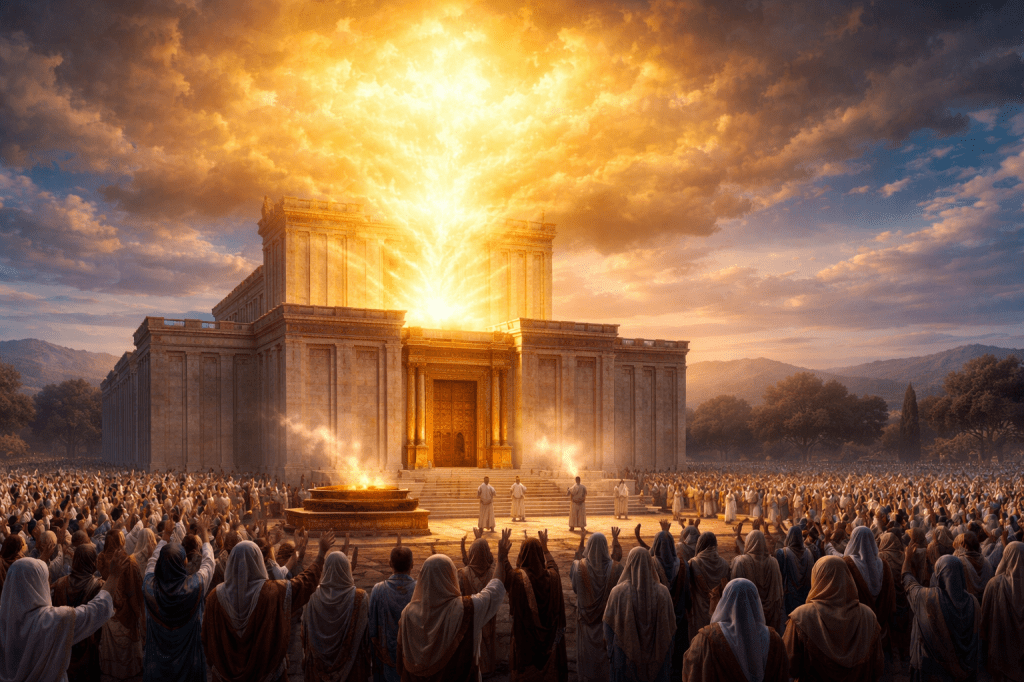
    EVENING— Living Beneath the Branches 🌳

    • Focal Passage: Leviticus 23:42-43

    “You shall live in booths for seven days; all the native-born in Israel shall live in booths, so that your generations may know that I had the sons of Israel live in booths when I brought them out from the land of Egypt. I am the Lord your God.”

    Of all the feasts, the Feast of Booths may feel the most unusual—and the most tender.

    After harvest was complete, after the solemn weight of the Day of Atonement, God told His people to step outside their solid homes and live for a week in shelters made of branches, leaves, and boughs—palms, willows, trees🌳 from the land itself 🌿🪵.

    It was intentional discomfort.

    The booths were fragile. You could see the sky through them. You could hear the wind. You were reminded—every night—that you were once a people with no permanent shelter at all.

    This feast did two things at once:

    • It remembered sorrow — slavery, wandering, dependence.
    • It commanded joy — “Then celebrate with joy before the Lord your God for seven days.”

    Joy follows cleansing. The Feast of Booths came after the Day of Atonement. Holiness first. Then happiness. People who want joy without repentance always end up disappointed.

    And yet, this feast also looked forward.

    The prophet Zechariah saw a day when all nations would come to Jerusalem to celebrate the Feast of Booths—when God’s presence would again dwell openly among His people (Zechariah 14:16–19).

    That future hope stepped into history during this feast.

    In John 7, during the Feast of Booths, Jesus stood in the temple courts—while water was poured out and lamps blazed—and cried out:

    “If anyone is thirsty, let him come to Me and drink.”
    (John 7:37, NASB 1995)

    The true shelter had arrived.

    The branches once overhead pointed beyond themselves—to the One who would “tabernacle” among us, and who now invites us to live under the covering of His grace.

    We live in fragile places. Temporary shelters. Lives where sorrow and rejoicing often share the same roof.

    But we rejoice anyway—because God dwells with us even there.

    • Reflection:  Where has God asked you to rejoice—not because life feels secure, but because He is present?
    • Closing Prayer:  Lord God, You are the Author of time and the Keeper of our days.  Teach us to remember Your faithfulness—not only in our minds, but in the rhythms of our lives.
      When we live in temporary places, help us trust Your presence.
      When we rejoice, keep our joy rooted in Your grace.
      Thank You for being our true shelter, our lasting dwelling, and our sure hope—from tree to tree
      🌳.
      Amen.
    • Read Leviticus 19:9-34

    MORNING— Open Hands, Open Eyes

    • Focal Passage: Leviticus 19:9-10

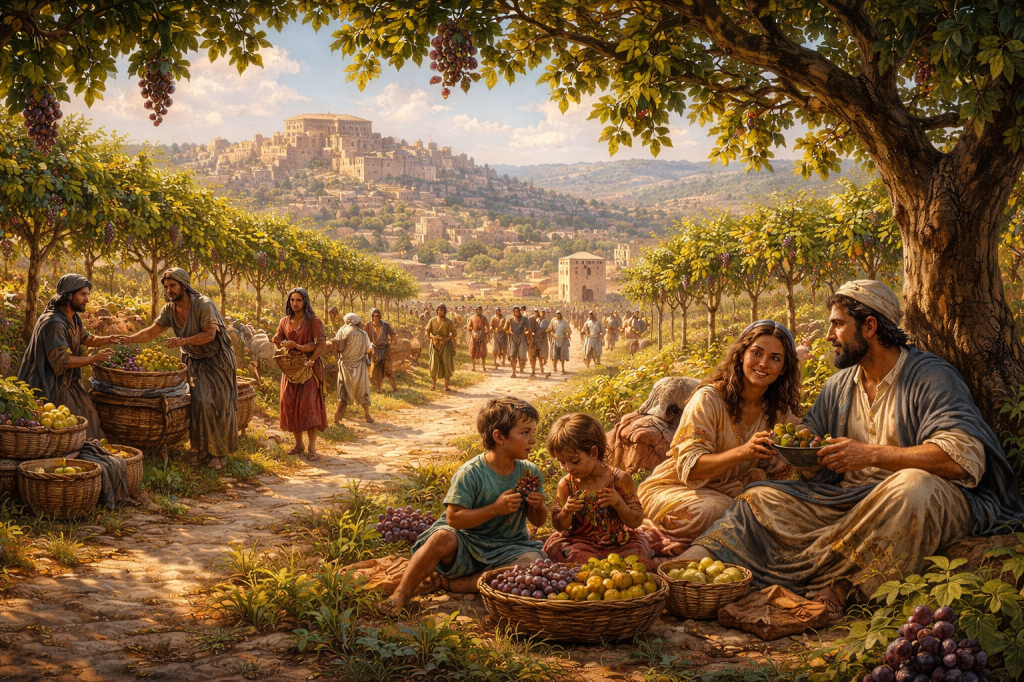
    “Now when you reap the harvest of your land, you shall not reap to the very corners of your field, nor shall you gather the gleanings of your harvest. Nor shall you glean your vineyard, nor shall you gather the fallen fruit of your vineyard; you shall leave them for the needy and for the stranger. I am the LORD your God.”

    Leviticus doesn’t just tell Israel to “be holy.” It shows what holiness looks like with skin on—what it looks like in a field, in a paycheck, in a conversation, in the way you treat someone who can’t “keep up.”

    It’s striking that one of the most-quoted Old Testament commands in the New Testament comes from this very chapter. Leviticus 19:18 is quoted or echoed repeatedly (and has a prominent place in Jesus’ “Top Two” in Mark 12:31): “You shall love your neighbor as yourself.” And right around that command, God gives everyday, practical ways to love.

    Here’s one of the simplest: leave margin. Don’t squeeze everything out of the field. Don’t live like every last stalk is yours, every last grape is owed to you, every last dollar is untouchable. God built generosity into the harvesting process itself—so that the poor could live with dignity, not with humiliation.

    And holiness isn’t only about what we give—it’s also about how we treat the vulnerable.

    Leviticus 19:14 (NASB 1995) says:

    “You shall not curse a deaf man, nor place a stumbling block before the blind, but you shall revere your God; I am the LORD.”

    In other words: God takes personally the way we treat the impaired. Reverence for God shows up in restraint, patience, honor, and protection—especially when someone’s weakness could be exploited.

    Holiness is not a halo. It’s a harvest with corners left. It’s a mouth that doesn’t mock. It’s a heart that notices who is struggling—and then acts.

    • Reflection:  Where can you “leave the corners” today—creating margin in your time, money, attention, or schedule so a needy person isn’t squeezed out?

    EVENING— Letting Grudges Go

    • Focal Passage: Leviticus 19:18

    “You shall not take vengeance, nor bear any grudge against the sons of your people, but you shall love your neighbor as yourself; I am the LORD.”

    By evening, love has usually been tested. Not by ideas or principles, but by real people—conversations that didn’t go well, words that lingered, frustrations that followed us home. This is where loving our neighbor stops being a concept and becomes a choice.

    Leviticus 19 moves from the field into the heart. It speaks to grudges held in secret, resentment nurtured slowly, and words spoken behind backs. God will not let love appear generous in public while it grows bitter in private.

    “Love your neighbor as yourself” is not sentimental. It confronts how we speak, how we judge, how we forgive—or refuse to.

    The New Testament repeatedly returns to this verse. Jesus calls it second only to loving God. Paul says it fulfills the whole law. James calls it the royal law. Why? Because it exposes what truly rules us—mercy or self-interest.

    Loving our neighbor means refusing to keep score. It means choosing not to weaponize memory. It means allowing the grace we depend on to shape how we treat others.

    This kind of love does not come naturally. It flows from a deeper reality: we are already loved. Already forgiven. Already shown mercy we did not earn.

    And once again, the command ends where it began:
    “I am the LORD.”
    Love is not optional and holiness is not negotiable.

    • Reflection:  Who tested your love today—and what would it look like to respond with the same patience and mercy God has shown you?
    • Closing Prayer:  Holy God, You have shown us that love is not abstract—it is practiced in fields, homes, conversations, and choices. Teach us to leave room for others in what You have given us, and grace in how we respond to those around us. Shape our hearts to reflect Yours, so that loving our neighbor becomes the natural fruit of walking with You.
      Amen.
    • Read Leviticus 16:29-34

    MORNING— Once a Year for All Their Sin

    • Focal Passage: Leviticus 16:30-31

    “For it is on this day that atonement shall be made for you to cleanse you; you will be clean from all your sins before the LORD. It is to be a Sabbath of solemn rest for you, that you may humble your souls; it is a permanent statute.”

    Traveling across the U.S. the east side of Colorado is flat.  Strasburg, CO is 5,381 ft in elevation on the East side of Denver.  Idaho Springs is 7,526 ft on the west side of Denver.  You can see the Rockies from miles away.  (Goodland, KS… the state you just left is only 3,681 ft.

    That is the shift we feel when we arrive at Leviticus 16.

    Everything leading up to this chapter prepares us for this moment.
    The offerings.
    The priests.
    The laws of uncleanness.

    Now comes the most important day on Israel’s calendar: the Day of Atonement.

    On this day, the camp of Israel moved more slowly.

    Fires burned lower than usual. Work stopped. Voices softened. This was not a day for hurry or noise. It was a day to wait.

    Somewhere beyond the curtain, one man was walking alone.

    Aaron did not wear his usual garments. There was no breastpiece with stones, no gold, no visible splendor. He had washed. He had dressed in plain linen. He stepped forward quietly, carrying blood that was not his own, knowing that what he was about to do mattered for everyone.

    No one followed him.

    Parents gathered their children close. Elders stood silently. The people waited—because what happened inside the tent would determine whether the nation could go on.

    This was the only day of the year when someone passed beyond that final barrier. The curtain did not open easily or often. God had been clear: His presence was not to be entered casually or on impulse.

    So Israel waited.

    They waited while incense rose.
    They waited while blood was applied.
    They waited while sin was dealt with.

    Leviticus does not tell us what the people were feeling, but the quiet says enough. Forgiveness was not assumed. It was not demanded. It was received—if God granted it.

    And when Aaron finally emerged, alive, the waiting ended.

    Another year had been given.

    • Reflection:  Where might God be inviting you today to slow down, be still, and trust Him to do the work only He can do?

    EVENING— The Sin-Bearer

    • Focal Passage: Leviticus 16:21-22

    “Then Aaron shall lay both of his hands on the head of the live goat, and confess over it all the iniquities of the sons of Israel and all their transgressions in regard to all their sins; and he shall lay them on the head of the goat and send it away into the wilderness… And the goat shall bear on itself all their iniquities to a solitary land.”

    One of the most unforgettable moments of the Day of Atonement was more public.  It was the release of the scapegoat.

    The high priest placed both hands on its head and confessed all the sins of the people. Scripture stacks the words: iniquities, transgressions, sins. Nothing was minimized. Nothing was hidden.

    Then the goat was driven away.

    As it disappeared into the wilderness, the message was unmistakable:
    your sins are no longer here.

    They were not merely forgiven.
    They were removed.

    The goat itself held no power to do this. It was a sign—an acted-out promise—that God intended to deal with sin more completely than this moment could hope to accomplish.

    The New Testament tells us plainly what Leviticus only pictured.

    “He Himself bore our sins in His body on the cross.” (1 Peter 2:24)

    “God made Him who knew no sin to be sin on our behalf.” (2 Corinthians 5:21)

    Jesus did not merely die instead of sinners.
    He was identified with sinners.

    Like the scapegoat, He carried what was placed upon Him.
    Like the scapegoat, He was led outside the camp.
    Like the scapegoat, He bore the shame so the people could remain near.

    Hebrews tells us that Jesus suffered outside the gate to sanctify the people by His own blood (Hebrews 13:11–12). What the goat enacted symbolically, Christ accomplished finally.

    The gospel does not say your sins are managed.
    It says they are borne away.

    • Reflection:  What sin or shame are you still holding onto that Christ has already carried away?
    • Closing Prayer:  Merciful God, thank You for laying my sin on Your Son and carrying it away from me. Help me release what You have already removed, and teach my heart to live in the freedom of forgiveness You have secured. Amen.
    • Read Leviticus 1

    MORNING— Drawing Near to God 🪵

    • Focal Passage: Leviticus 1:3-4

    “If his offering is a burnt offering from the herd, he shall offer it, a male without defect; he shall offer it at the doorway of the tent of meeting, that he may be accepted before the Lord. He shall lay his hand on the head of the burnt offering, that it may be accepted for him to make atonement on his behalf.”

    The first sacrifice described in Leviticus is placed there by design. Before peace offerings, fellowship offerings, or celebrations, God begins with the burnt offering—because before anything else, sinful people must be made acceptable in God’s presence.

    The burnt offering stood at the entrance to the tabernacle. You could not move past it. You could not go around it. Drawing near to God always began with surrender.

    Aaron and his sons built the fire and arranged the wood 🪵on the altar, but the sacrifice was brought to them by the people.  This offering was completely consumed. Nothing was held back. No portion was eaten. It was a declaration that approaching God required giving Him everything—and trusting Him for acceptance.

    This story did not begin in Leviticus.

    When Adam and Eve sinned, God Himself took the life of an animal to provide garments to cover their shame.
    When Abel approached God, he brought a sacrifice of life—and God received it.
    When Abraham lifted the knife over Isaac, God provided a ram in his place.

    Over and over, Scripture teaches the same truth: God provides what is needed to draw near to Him.

    In Leviticus 1, the worshiper laid his hand on the animal—leaning his full weight upon it—identifying himself with the sacrifice. The animal died in his place. The offering was more than about specific offenses, but about a deeper problem: the sinful condition of the human heart.

    The burnt offering declared, “I cannot come to God unless another stands in my place.”

    • Reflection:  What does it look like for you to come to God today not holding back, but trusting Him fully for acceptance?

    EVENING—The “Once for All” Sacrifice

    • Focal Passage: Leviticus 1:9

    “The priest shall offer up in smoke all of it on the altar for a burnt offering, an offering by fire of a soothing aroma to the Lord.”

    The burnt offering was called a “soothing aroma”—not because God delighted in smoke, but because atonement had been made. God’s righteous anger was satisfied, not by human effort, but by a substitute He accepted.

    From the beginning, God has been teaching His people that nearness to Him is always costly—but never earned.

    Abel’s sacrifice was accepted because it trusted God’s way.
    Abraham’s ram spared his son and pointed forward to a greater provision still to come.

    These sacrifices were foreshadowing a greater sacrifice to come.

    When John the Baptist saw Jesus, he did not say, “Behold the Lamb who helps you try harder.”
    He said, “Behold the Lamb of God who takes away the sin of the world.”

    In Jesus, the burnt offering has been fulfilled. Christ has been offered once for all.

    We still draw near to God in like manner—surrendering, trusting, leaning fully on the provision the Father has made. The New Testament also calls us to present ourselves as living sacrifices (Romans 12:1)—not to earn acceptance, but because we already have it.

    Worthy is the Lamb that was slain. (Revelation 5:12)

    • Reflection:  Where might God be inviting you to stop striving for acceptance and rest instead in the sacrifice He has already provided?
    • Closing Prayer:  Father, thank You for making a way for me to draw near to You. Teach me to trust Your provision, to surrender fully, and to rest in the sacrifice You have given for me. Jesus, thank you for making a way for me through Your shed blood. Amen.

    • Read Exodus 40

    MORNING— A Dwelling Place for Glory

    • Focal Passage: Exodus 40:34-35

    “Then the cloud covered the tent of meeting, and the glory of the Lord filled the tabernacle. Moses was not able to enter the tent of meeting because the cloud had settled on it, and the glory of the Lord filled the tabernacle.”

    When the tabernacle was finally assembled, something extraordinary happened: God moved in.

    Moses had followed every instruction precisely—every frame set, every furnishing placed, every priest washed and anointed. And when the work was complete, the glory of the Lord descended so fully that even Moses could not enter. The structure became a house of glory.

    But the tabernacle was never meant to be the final destination. It was a preview.

    Every part of that structure was designed to point forward—to prepare Israel for the day when God’s glory would not merely descend among His people, but dwell with them.

    • The tabernacle itself—covered, contained, dwelling in the midst of the camp—foreshadowed the incarnation, when “the Word became flesh, and dwelt among us” (John 1:14).
    • The veil guarding the Holy of Holies anticipated Christ’s flesh, torn so that access to God would be opened.
    • The table of bread pointed forward to Jesus, the Bread of Life.
    • The lampstand anticipated Christ, the Light of the world.
    • The altar of incense reflected His ongoing intercession.
    • The altar of sacrifice foreshadowed the cross.
    • The laver of cleansing pointed to a deeper, final cleansing of the heart.

    The glory that filled the tabernacle in Exodus 40 was real—but it was not meant to remain there forever. It trained God’s people to recognize glory when it would no longer fill a tent, but walk among them in the person of Jesus Christ.

    • Reflection:  How does seeing the tabernacle as a preview of Christ deepen your awareness of God’s desire to dwell with His people?

    EVENING— Glory That Cannot Be Contained

    • Focal Passage: Exodus 40:36-38

    “Throughout all their journeys whenever the cloud was taken up from over the tabernacle, the sons of Israel would set out; but if the cloud was not taken up, then they did not set out until the day when it was taken up. For throughout all their journeys, the cloud of the Lord was on the tabernacle by day, and there was fire in it by night, in the sight of all the house of Israel.”

    God’s glory was never static.

    In the wilderness, the glory did not stay locked inside the tabernacle like some kind of caged tiger. When the cloud moved, the people moved. When it stayed, they stayed. God’s presence guided them—not just where to worship, but how to live.

    Years later, when Solomon dedicated the temple—the ornate, permanent form of the tabernacle—he stood in awe and asked:

    “But will God indeed dwell on the earth? Behold, heaven and earth cannot contain You, how much less this house which I have built!”
    (1 Kings 8:27)

    If Solomon couldn’t imagine how God would fit inside the structure he had built, what the apostle Paul later prayed would have blown his mind.

    Paul prayed that God
    “would grant you, according to the riches of His glory, to be strengthened with power through His Spirit in the inner man, so that Christ may dwell in your hearts through faith… that you may be filled up to all the fullness of God.” (Ephesians 3:16–19)

    What?!

    The glory of God—
    if the heavens and the earth could not contain it…
    if the tabernacle could not contain it…
    if even the temple could not contain it—

    to suggest that God would pour that glory into a human heart, that Christ would dwell within us (to take up residence), is almost impossible to comprehend.

    It would be like pouring the ocean into a thimble.

    And yet, this was God’s desire.
    Indeed, it was His plan all along.

    In Exodus 40, the glory of God descends on the tabernacle—but it was never meant to remain there. God’s plan was always greater. His glory would fall on Jesus. And through our relationship with Him—because Christ takes up residence in our hearts—we would be filled with His fullness.

    If that doesn’t blow your mind, nothing in this life will.

    Luis Palau once told of meeting a powerful general who ruled his country with force and confidence. After dismissing his aides, the general confessed, “I act tough. I act like I know what I’m doing. But on the inside… I am a small, scared twelve-year-old boy. I need God.” (Palau, p. 225)

    In the end, we are all the same—simple people with deep needs, familiar fears, stubborn sins, and a hunger for the same good news.

    When we put our faith in Jesus—trusting Him to save us, believing He has prepared a place for us in His heaven—then we wake up to this astonishing truth: Christ in you, the hope of glory.

    • Reflection:  How might the knowledge of the indwelling Christ change your perspective of God?
    • Closing Prayer:  Father, thank You for revealing Your glory in Jesus and for choosing to dwell within Your people. Prepare my heart to be a dwelling place for Your presence, and help me rest tonight in the hope that Christ lives in me. Amen.
    • Read Exodus 32

    MORNING— The Sound of Defeat

    • Focal Passage: Exodus 32:1

    “Now when the people saw that Moses delayed to come down from the mountain, the people assembled about Aaron and said to him, ‘Come, make us a god who will go before us;…”

    There are defeats that don’t sound like defeat. That’s what makes them so dangerous.

    Israel is singing. Eating. Drinking. “Rose up to play.” If you only listened from a distance, you might assume it’s celebration—like victory has finally arrived at the base of Sinai.

    But it’s the sound of a people drifting away from the God who rescued them.

    Notice what triggers it: waiting.
    “Now when the people saw that Moses delayed…” (v. 1). God’s timing felt like absence. Silence felt like abandonment. And the moment they started interpreting God’s delay as God’s neglect, they went looking for something they could control.

    So they say, “Come, make us a god who will go before us.” The tragedy is not that they wanted guidance—the tragedy is that they wanted guidance without surrender. A god they could see. Handle. Manage. A portable deity.

    And Aaron—who should have known better—lets group pressure become his compass. He takes what was meant to honor the Lord (their gold) and turns it into an image that pleases the eyes of the crowd.

    Old Testament scholar Ronald Rolheiser put his finger on this restless tug-of-war in the human heart:
    “We want to be a saint, but we also want to feel every sensation experienced by sinners…” (Rolheiser, The Holy Longing).
    That’s the inner noise behind the golden calf. We want God—and we want a substitute god we can control. We want holiness—and we want a little idol we can baptize and keep.

    Here’s how you can recognize the sound of defeat in your own life:
    It often comes disguised as normal, positive affirmations!
    It sounds like, “Everybody’s doing it.”
    It sounds like, “It’s not that big of a deal.”
    It sounds like, “I’ll come back to God later.”

    But Heaven hears our defeat clearly.

    • Reflection:  Where has waiting—or uncertainty—tempted you to “make something” to soothe you instead of trusting the Lord who carried you this far?

    EVENING— When the Party’s Over

    • Focal Passage: Exodus 19:5

    “On the next day Moses said to the people, ‘You yourselves have committed a great sin; and now I am going up to the Lord, perhaps I can make atonement for your sin.”

    There’s a moment when the music stops.

    Moses comes down and sees what the celebration really is: worship without God, religion without reverence, a feast that ends in shame. And the calf that looked so strong a few hours earlier becomes powder in Moses’ hands.

    That’s what idols do. They shine until they’re tested. Then they crumble—and they leave a bitter taste.

    A true story from modern Egypt helps me feel the contrast.

    In Cairo there is a community sometimes called “Garbage City,” where thousands of poor trash collectors sort refuse to survive. In 1972, a wealthy young businessman lost an expensive wristwatch—reported to be worth around $11,000. An elderly garbage man found it, traced the owner, and returned it. He didn’t ask for a reward. He simply said, “My Christ told me to be honest until death.” The businessman later told a reporter that because of that act, he began to seek Christ, studied the Bible, and eventually became a Christian—later serving among the poor through church ministry. (As retold in Rick James, A Million Ways to Die)

    Do you see the contrast?

    At Sinai, idol-worship produces chaos that spreads—leaders rationalize, people spiral, and a whole camp “rose up to play.” But in Cairo, worship of Christ produced something sturdy: integrity.

    Idols promise freedom, but they enslave.
    The living God commands obedience, but He produces life.

    And then comes the sweetest line in this whole wreck of a chapter:
    “I am going up to the Lord, perhaps I can make atonement for your sin.” (v. 30)

    That’s mercy moving toward the mess.

    We are meant to hear in this passage the faint beginning of the gospel: someone going up on behalf of guilty people. Someone pleading. Someone standing in the gap. Someone making atonement on our behalf.

    Tonight, don’t just hear the sound of defeat. Hear the sound of grace calling you home.

    • Reflection:  Where do you hear God’s grace calling you back tonight—inviting you not to hide in defeat, but to return, repent, and be restored?
    • Closing Prayer:  Father, thank You for mercy when I’ve wandered. Expose my idols, bring me back to true worship, and help me rest tonight knowing I belong to You. Thank you for climbing Calvary’s hill to make atonement for my sin. In Jesus’ name, Amen.
    • Read Exodus 20

    MORNING— Ten Commandments at the Center

    • Focal Passage: Exodus 20:1-3

    “Then God spoke all these words, saying, ‘I am the LORD your God, who brought you out of the land of Egypt, out of the house of slavery. You shall have no other gods before Me.”

    The Ten Commandments were not given to an oppressed people trying to earn freedom. They were given to a people who had already been freed—and now needed structure.

    Freedom without form does not last. A nation released from slavery still needs order, clarity, and direction if it is to endure.

    The first portion of the Ten Commandments is directed upward. These commands establish who holds ultimate authority and how that authority is to be acknowledged.

    They address allegiance (no other gods), representation (no idols), reverence (God’s name), and rhythm (the Sabbath). Together, they orient life toward God as the center rather than the self. Old Testament scholar Christopher J. H. Wright notes that these opening commands function as the foundation for everything that follows:

    “The first four commandments establish the framework within which all human moral behavior must operate. If God is displaced, the rest of the law inevitably unravels.”
    Christopher J. H. Wright, Old Testament Ethics for the People of God

    When reverence for God erodes, something else quickly assumes the highest place—power, ideology, wealth, or self.

    These early commands anchor life to what does not shift.

    The law begins not with human conduct, but with divine priority. Only when that order is established can anything else remain stable.

    • Reflection:  What currently sets the rhythm of your life—worship and reverence, or competing demands that slowly displace them?

    MORNING— Ten Commandments: Rules that Guard Life

    • Focal Passage: Exodus 20:12-17

    “Honor your father and your mother…
    You shall not murder.
    You shall not commit adultery.
    You shall not steal.
    You shall not bear false witness against your neighbor.
    You shall not covet…”

    These six commandments do more than restrain evil; they preserve love in shared life. They protect trust between parents and children, neighbors and strangers, husbands and wives, the strong and the vulnerable. Where they are honored, communities hold. Where they are ignored, they fracture.

    A powerful example came in the aftermath of the September 11, 2001 attacks. In New York City, thousands of ordinary citizens acted instinctively in ways that mirrored these commands. Strangers carried the injured down stairwells. Office workers stayed behind to help coworkers escape. Wallets, jewelry, and cash were later returned untouched. Families opened their homes to people they had never met. Blood donation centers overflowed.

    Sociologists and journalists who studied those days noted something striking: despite fear and loss, there was an unusual absence of looting, deception, or exploitation. In a moment when order could have collapsed, people chose restraint, truth, protection of life, and sacrificial care for others.

    Those actions did not happen because new laws were written that day. They happened because deeply held moral restraints—honoring life, respecting what belongs to others, telling the truth, placing people above self—rose to the surface when they were most needed.

    That is what these commandments do. They hold society together not by force, but by love expressed through restraint.

    • Reflection:  How did your choices today contribute—however quietly—to trust, safety, and care for the people around you?
    • Closing Prayer:  Lord God, order our lives rightly before You—our worship, our words, and our time. From that order, govern how we live with others, guarding our actions, our speech, and our desires. Teach us to walk within Your wise commands, for through them You preserve what is good and hold life together.  Amen.
    • Read Exodus 19

    MORNING— A DTR Moment at Mount Sinai

    • Focal Passage: Exodus 19:4-6

    “You yourselves have seen what I did to the Egyptians, and how I bore you on eagles’ wings, and brought you to Myself. Now then, if you will indeed obey My voice and keep My covenant, then you shall be My own possession among all the peoples, for all the earth is Mine; and you shall be to Me a kingdom of priests and a holy nation.”

    There comes a moment in every meaningful relationship when assumptions are no longer enough.
    It’s the moment when things must be said out loud. Defined. Owned.

    We often call it a DTRDefine the Relationship.

    By Exodus 19, Israel has been rescued, fed, guided, protected, and carried. The Red Sea is behind them. Manna appears each morning. Water has flowed from the rock. God’s presence has been unmistakable. But one crucial thing is still missing: the relationship has not yet been clearly defined.

    So God brings them to Sinai.

    This mountain is not random. Years earlier, when Moses stood before the burning bush, God told him, “When you have brought the people out of Egypt, you will worship God at this mountain.” What began as a private encounter now becomes a public declaration. One man’s calling becomes a nation’s identity.

    Before God gives commands, He tells a story.

    “You have seen what I did.”
    “I carried you.”
    “I brought you to Myself.”

    God reminds them of their shared history. This is not the language of a taskmaster. It is the language of relationship. He does not say, “Here is what you owe Me.” He says, “Here is what I have already done for you.”

    Only then does He say the defining words:
    “You shall be My own possession.”

    Not a workforce. Not a social experiment. Not a temporary alliance.

    His.

    This moment matters because people are prone to forget who they are when circumstances change. Victory fades. Gratitude thins. Expectations creep in. Without clarity, even rescued people begin to drift.

    There is something deeply personal here for us.

    Many people live with God in a vague, undefined way. He has helped them. Provided for them. Protected them. But they’ve never settled the deeper question: Am I His—or am I just receiving benefits?

    I’ve known people who attended church faithfully for years yet live with constant anxiety about God’s approval. They served, give, and try hard—because they are never sure where they stand. One man once told me, “I know God saved me… I just don’t know if He actually wants me.” That’s a DTR problem.

    Hear God’s word thunder from Sinai. God does not invite Israel into covenant because they are strong, faithful, or impressive. He invites them because He has already chosen them.

    At Sinai, God is saying, “Before you do anything for Me, understand this: you belong to Me.”

    • Reflection:  Where in your life might God be inviting you to stop relating to Him out of uncertainty or fear and begin resting in the truth that you belong to Him?

    EVENING— Here Comes My Friend

    • Focal Passage: Exodus 19:5

    “…then you shall be My own possession among all the peoples, for all the earth is Mine.”

    Identity changes everything.

    Frederick Douglass once approached the White House, hoping to attend Abraham Lincoln’s second inaugural reception. As he reached the door, officers stopped him. When he tried to enter, they seized him, mocking and threatening him, preparing to drag him back outside.

    Douglass cried out, “Just tell President Lincoln that Frederick Douglass is at the door.”

    Confusion followed. Orders were shouted. Suddenly the officers released him and escorted him inside. The room fell silent as Abraham Lincoln crossed the floor, extended his hand, and announced clearly for all to hear:

    “Here comes my friend Frederick Douglass.”

    In that moment, everything changed.
    If the President called him friend, who dared treat him otherwise?

    This is the power of Exodus 19.

    God does not merely tolerate Israel. He does not call them useful. He calls them His own possession. And when God defines the relationship, the status of the people is forever altered.

    Later Scripture tells us that Jesus would define the relationship again—this time not at a trembling mountain, but at an intimate supper with His 12 in an upper room. He would say to them, “I no longer call you servants… I have called you friends.” (John 15:15)

    If the Son of God calls you friend,
    if the Lord of the covenant calls you His own,
    who gets to redefine you?

    Sin does not.
    Fear does not.
    Your past does not.

    To belong to God is to live with both humility and security—to stand in awe without shrinking back, to obey without striving for approval.

    At Sinai, the people learn who God is.
    At the cross, we learn how far He will go to claim us.

    And once that relationship is defined, everything else—obedience, worship, mission—simply flows.

    • Reflection:  Where in your life might God be inviting you to stop relating to Him out of uncertainty or fear and begin resting in the truth that you belong to Him?
    • Closing Prayer:  Father, thank You Friend, for carrying me and bringing me to Yourself.  Help me to follow You in holy obedience based on the identity I’ve found in you.  Let me rest this evening in the knowledge that I am Yours.  Amen.
    • Read Exodus 16

    MORNING— Manna in the Morning

    • Focal Passage: Exodus 16:4

    “Then the Lord said to Moses, ‘Behold, I will rain bread from heaven for you; and the people shall go out and gather a day’s portion every day, that I may test them, whether or not they will walk in My instruction.’”

    Israel leaves Elim rested, watered, and hopeful. But before long, the wilderness of Sin stretches out before them, and the joy of palm trees fades into the ache of hunger. It doesn’t take long for old memories to resurface—selective memories. Egypt begins to look better in hindsight. Slavery is remembered as comfort. Bondage is recast as abundance. “We sat by the pots of meat,” they say, forgetting the whips that stood nearby.

    Grumbling always edits history.

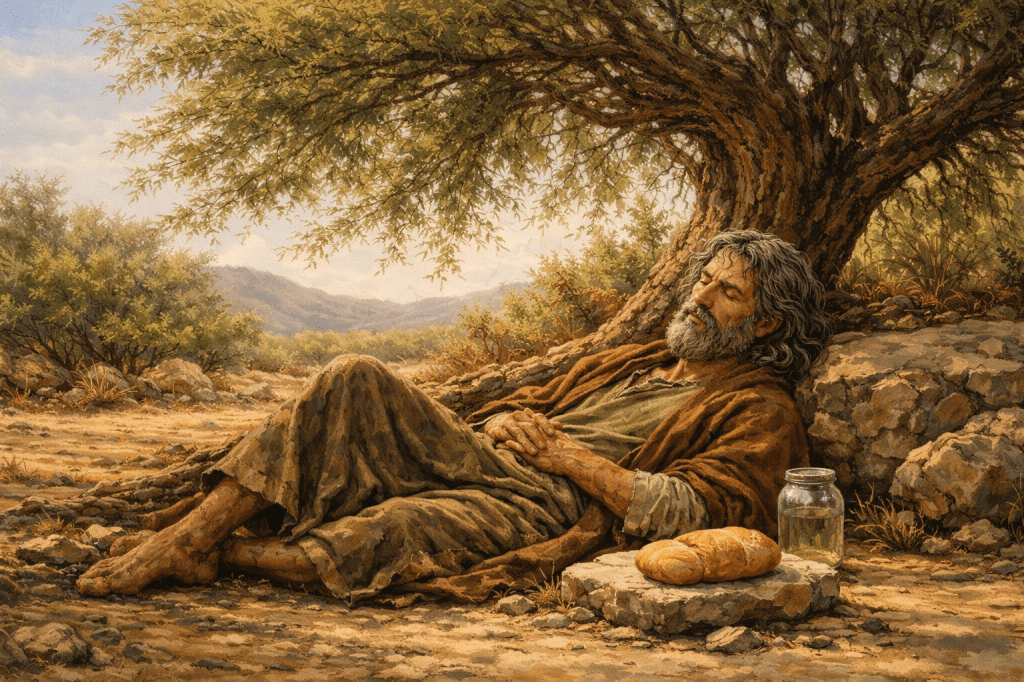
    God hears their complaints—not because they are noble, but because they are needy. And instead of rebuke, He responds with provision. “I will rain bread from heaven for you.” Not storehouses. Not surplus. Bread. Enough for today.

    When the manna appears, it confuses them. “What is it?” they ask. The word manna simply means “What is it?

    God calls it bread from heaven. The people can only describe it by approximation: white like coriander seed, tasting like wafers with honey. It is nourishment, not indulgence. Provision, not excess.

    Manna teaches a rhythm of trust. It arrives daily. It cannot be hoarded. Yesterday’s manna will not sustain today’s hunger. God gives what is needed, when it is needed, so that His people learn dependence rather than control.

    Years later, Moses would command that a portion of manna be kept—not to be eaten, but remembered. The miracle was not just the food itself, but the faith it required. Manna was never meant to replace trust in God. It was meant to train it.

    We often pray for “more” when God is offering “enough.” We ask for certainty when God offers daily grace. Like Israel, we sometimes stand over God’s provision and ask, “What is this?” when we should be saying, “Thank You.”

    Manna reminds us that God knows what we need before we ask—and that His care arrives right on time, even if it doesn’t arrive in the form we imagined.

    • Reflection:  How am I responding to God’s daily provision—trusting Him for today, or worrying about tomorrow?

    MORNING— Bread that Sustains

    • Focal Passage: Exodus 16:18

    “When they measured it with an omer, he who had gathered much had no excess, and he who had gathered little had no lack.”

    Manna was not only daily—it was communal. Some gathered more. Some gathered less. But no one lacked. God’s provision was never meant to terminate on the individual. What one received became a gift for another.

    Paul would later point back to this moment and call it a picture of God’s economy: abundance meeting need, not excess feeding greed. The miracle was not just bread on the ground—it was equality in the camp.

    Someone on Facebook gave shout out to his new friend, Hayden.  He had stopped at a McDonald’s on the way home and his card wouldn’t work. Before he could say a word, the young man behind the counter—Hayden—pulled out his own debit card and paid for his meal. No hesitation. No speech. Just generosity. When the gentleman tried to refuse, Hayden smiled and said, “I got you.” Inside the bag, he slipped back the cash the customer tried to give him, along with a receipt that read, “Have a blessed day.”

    That is manna lived out.  Give of your surplus.

    But manna also came with limits. Even provision could be mishandled. Gather too much and it spoiled. Ignore God’s rhythm of Sabbath and the gift turned sour. God was not being restrictive—He was being protective. He knew that blessings hoarded would crowd out rest, trust, and worship. The Sabbath itself was part of the gift.

    Jesus later stood before a hungry crowd and said something astonishing: “Your fathers ate the manna in the wilderness, and they died… I am the bread of life. Manna sustained bodies for a day. Christ sustains souls forever.

    The wilderness teaches us that God’s greatest gift is not what He places in our hands, but Who He places at the center of our lives. Morning by morning, His mercies still appear—quietly, faithfully, sufficiently.

    Tomorrow morning, you will wake up to a choice. You can grumble at what is missing, or give thanks for what has been provided. You can worry about tomorrow’s bread, or trust the God who has never missed a morning yet.

    Manna still falls. God is still faithful.

    • Reflection:  Where might God be inviting me to receive His provision with gratitude—and to share it freely with others?
    • Closing Prayer:  Father, thank You for daily bread—often simple, always sufficient. Teach me to trust You one day at a time. Guard my heart from grumbling, and shape it toward gratitude. Help me receive Your gifts wisely and share them generously, remembering that You are my true provision. Amen.
    • Read Exodus 15

    MORNING— The Tree at Marah🌳

    • Focal Passage: Exodus 15:25

    “Then he cried out to the Lord, and the Lord showed him a tree; and he threw it into the waters, and the waters became sweet.”

    Exodus 15 opens with joy that spills over into song. The sea has closed behind Israel, the threat is gone, and freedom is no longer theoretical. It is real. Tangible. Miriam lifts her tambourine. The women dance. The people sing words they will remember for generations: “Sing to the Lord, for He is highly exalted; the horse and his rider He has hurled into the sea.”

    This is what it feels like when deliverance is fresh. The danger is past. God has come through. Faith feels effortless. Praise comes easily. These are the moments we wish we could freeze—when obedience seems rewarded without delay and trust feels natural rather than costly.

    But Exodus moves quickly from celebration to silence.

    Three days into the wilderness, the singing stops. The landscape is unforgiving. Throats are dry. Children are thirsty. When water finally appears at Marah, hope surges—only to collapse. The water is bitter. Undrinkable. And with that discovery, something else turns bitter as well.

    The people grumble. Not against Pharaoh. Not against the desert. But against Moses. Disappointment looks for someone to blame. It always does.

    Moses responds differently. He does not argue. He does not defend himself. He cries out to the Lord. And the Lord shows him a tree. 🌳 Not a sermon. Not an explanation. A tree.🌳 Moses throws it into the water, and what was bitter becomes sweet.

    God does not remove the desert. He transforms the experience within it.

    At Marah, the Lord reveals a new name for Himself: “I am the Lord, your healer.” Not just the God who rescues dramatically, but the God who heals quietly. Not only the One who defeats enemies, but the One who tends wounded hearts.

    Corrie ten Boom once met a German lawyer whose legs had been taken by the war. He sat in a wheelchair, consumed by bitterness toward God and humanity. When Corrie told him that bitterness must be surrendered, he snapped back, “What do you know about bitterness? You still have your legs.”

    So she told him about betrayal. About prison. About watching family members die because of one man’s treachery. About hatred so deep she wanted her betrayer dead.

    “I know what it is to hate,” she said. “And I know what it is to be healed.”

    Bitterness does not disappear because circumstances improve. It is healed when it is surrendered to God.

    That tree at Marah stands as a witness: God can sweeten what disappointment has poisoned.

    • Reflection:  Has bitterness begun to take hold in your spirit, tempting you to forget the victories God has granted in the past?

    EVENING— The Trees at Elim 🌳

    • Focal Passage: Exodus 15:27

    “Then they came to Elim where there were twelve springs of water and seventy date palms 🌳, and they camped there beside the waters.”

    God does not leave His people at Marah.

    Soon after, Israel arrives at Elim—a place marked not by scarcity, but abundance. Twelve springs of water. Seventy palm trees. 🌳 Shade. Rest. Provision that feels almost extravagant after the dryness of the desert.

    Elim is not the destination. But it is a gift.

    God knows when His people need rest. He knows when they need to stop moving, to drink deeply, to let healing settle in. Elim is a reminder that the journey with God is not unbroken hardship. There are oases along the way—places where strength is restored and perspective is renewed.

    Corrie ten Boom would return to Darmstadt a year after her conversation with the bitter lawyer. This time, he met her at the station, driving a specially equipped car. He laughed and told her that he had surrendered his bitterness to God. The man who once isolated himself in bitterness was now out and about serving others. The sourness that hollowed him out had been replaced with love.

    Elim does not erase Marah. It follows it.

    Life moves this way more often than we expect. Celebration gives way to disappointment. Disappointment can create bitterness. But God heals. Rest is given. And then the journey continues.  Just remember when you arrive at an oasis to fill your canteen.  You are going to need it.  Your journey is not yet complete.

    Wherever you find yourself this night—singing, thirsty, bitter, or resting—the Lord has not changed. He still heals. He still provides. And He is still leading His people home.

    • Reflection:  If you are experiencing a season of blessing in your life, how are you seeking to “fill your canteen” for the road ahead?
    • Closing Prayer:  Father, I surrender any bitterness I might be harboring in my heart due to my current circumstances.  Teach me that YOU are my healer.  Help me to rest under your gracious touch.  In moments that you supply in abundance, let me share it with others and use the experience to cultivate thanksgiving in my heart.  Amen.