
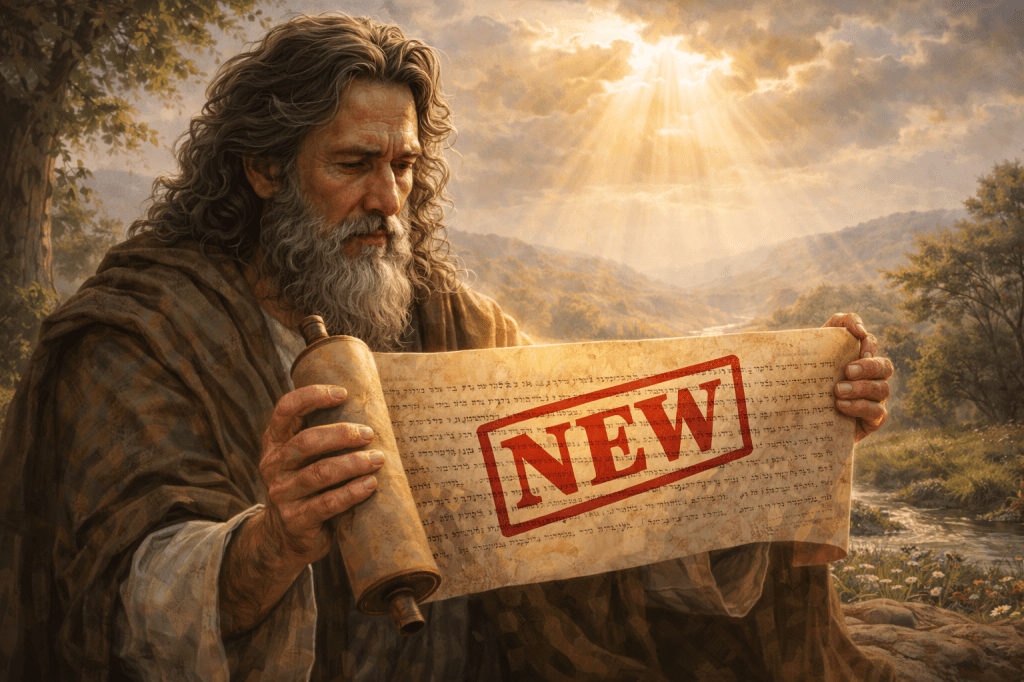
- Read Jeremiah 31
🌅MORNING – An Everlasting Love
- Focal Passage: Jeremiah 31:3
“I have loved you with an everlasting love; therefore I have drawn you with lovingkindness.”
Jeremiah 31 is one of the warmest chapters in the Old Testament.
God is not often called Father in the Old Testament, but God says plainly: “For I am a Father to Israel.” (31:9)
Later in the chapter, verses 18–20 read like the Old Testament version of the prodigal son story.
Ephraim—the largest northern tribe, representing the whole nation—comes home in repentance. He confesses his wandering. He acknowledges his stubbornness. And then we overhear God’s response: “Is Ephraim My dear son? Is he a delightful child? Indeed, as often as I have spoken against him, I certainly still remember him; Therefore My heart yearns for him; I will surely have mercy on him,” declares the Lord. (31:20)
That is the Father running down the road.
God had disciplined. God had warned. God had spoken against sin.
But His heart still yearned for Ephraim.
Verse 3 explains why: “I have loved you with an everlasting love; therefore I have drawn you with lovingkindness.”
That word lovingkindness is hesed—loyal covenant love. Love backed by promise. Love that does not evaporate when emotions cool. And then comes the promise that changes everything:
“Behold, days are coming,” declares the Lord, “when I will make a new covenant…” (31:31)
The old covenant revealed the problem clearly: law cannot change the human heart. The commands were holy—but the heart was resistant.
So God declares: “I will put My law within them and on their heart I will write it…” (31:33)
This is not external pressure. This is internal transformation.
Ezekiel uses different language to describe the same reality: “I will give you a new heart and put a new spirit within you; and I will remove the heart of stone from your flesh and give you a heart of flesh.” (Ezekiel 36:26)
A new heart.
A new spirit.
A new beginning.
- Reflection: Do you see God primarily as a disappointed judge—or as a Father whose heart still yearns? What would it mean to come home to Him today?
🌆EVENING– Sin Remembered No More
Focal Passage: Jeremiah 31:34
“For I will forgive their iniquity, and their sin I will remember no more.”
Jeremiah 31 is that hope announced centuries before the cross.
Under the old covenant, sin was covered temporarily. Sacrifice after sacrifice reminded the people that the problem was still there. But here God says something decisive: “I will forgive their iniquity.
“Their sin I will remember no more.”
Before the Reformation, Martin Luther once sat in his monk’s cell overwhelmed by his sin. His confessor began reciting the Apostles’ Creed. When he reached the words, “I believe in the forgiveness of sins,” Luther stopped him.
“Wait. What did you say?”
“The forgiveness of sins.”
Luther repeated it slowly, as if tasting it for the first time: “The forgiveness of sins. Then there is hope for me.”
Jeremiah 31 is that hope—spoken long before Calvary.
God is Father.
God’s love is everlasting.
God initiates.
God transforms.
God forgives.
We often try to manage guilt. We rehearse it. We carry it. We try to compensate for it. God offers something different: forgiveness.
Complete.
Final.
Personal.
Earlier in the chapter, the people had a proverb: “The fathers have eaten sour grapes, and the children’s teeth are set on edge.”
In other words—this mess isn’t my fault.
But Jeremiah says in this new covenant era: each person will know the Lord. Each person will stand accountable. And each person may receive forgiveness.
Not your parents’ faith.
Not your church’s faith.
Not your spouse’s faith.
Yours.
The New Covenant is deeply personal.
And it is deeply secure.
God ties His promise to the fixed order of creation: “If this fixed order departs from before Me… then the offspring of Israel also will cease…” (31:36)
As long as the sun rises and the moon shines, His covenant purposes stand.
That means tonight—whatever your failures, whatever your regrets—there is a covenant sealed in Christ’s blood that does not wobble with your performance.
- Reflection: Are you still carrying guilt that God has already addressed? What would it look like to rest—fully and finally—in the forgiveness secured through Christ?
- Closing Prayer: Father, thank You for everlasting love and covenant mercy. Write Your law upon our hearts. Forgive our iniquity. Teach us to live as people whose sin is remembered no more. Through Jesus Christ, the Mediator of the New Covenant, Amen.

Leave a comment