
- Read Joel 1
🌅MORNING– A Day to Remember
- Focal Passage: Joel 1:2
“Hear this, O elders, and listen, all inhabitants of the land. Has anything like this happened in your days or in your fathers’ days?”
Joel wastes no time.
No introduction. No king. No date stamp.
Just: “Hear this.”
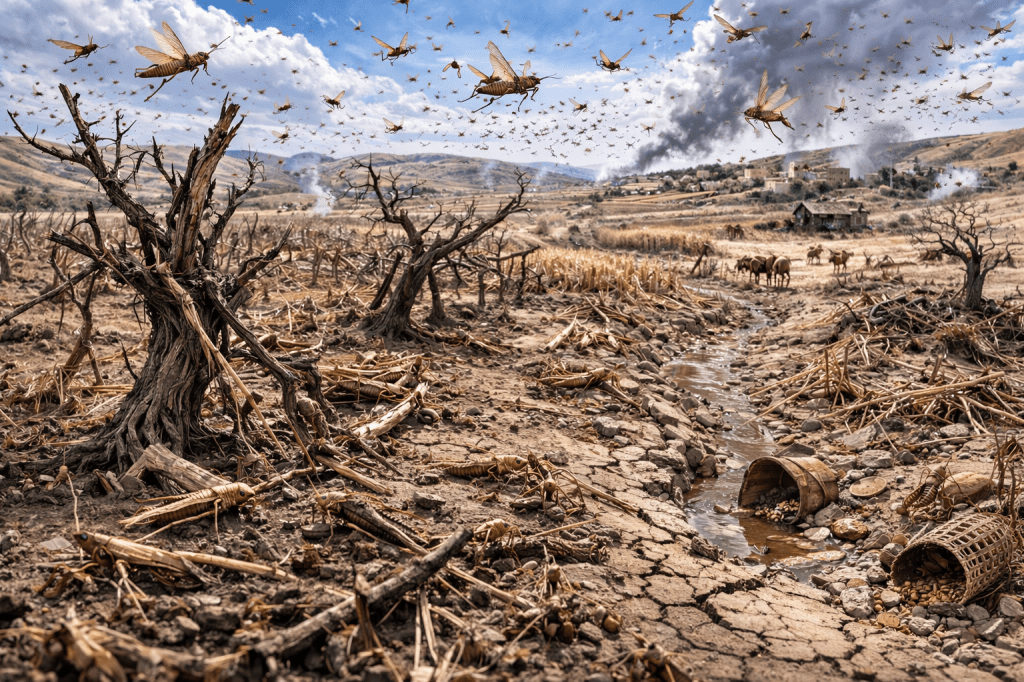
The prophet is blowing a whistle in the locker room. The game has turned. The time for chatter is over. A locust invasion has devastated the land. Successive waves — gnawing, swarming, creeping, stripping. Joel is not cataloging insect species. He is describing total loss.
Nothing escaped.
The vines are ruined. The fig trees splintered. The grain destroyed.
The oil gone. The barns empty. The cattle wandering without pasture. Even the trees of the field dry up.
And with them: “Rejoicing dries up from the sons of men.” (1:12)
This is not simply agricultural loss. It is emotional and spiritual collapse.
Joel tells the elders to tell the story to their children — and their children’s children. This day must be marked. Not forgotten. Not minimized. Not shrugged off as “just one of those years.”
Some days are simply bad days. Other days are to be marked for remembrance. Joel is teaching us to become skillful at interpreting events. Not every hardship is a warning from God. But sometimes there is correlation. Wisdom listens.
There are days you never plan to mark.
In California, Janine suffered a major heart attack. Not a scare. Not something routine. A true cardiac emergency. They rushed her in. Stents were placed. The procedure saved her life — and then complications begin. She started hemorrhaging.
They could not send her home. The night stretched long. The monitors hummed. The room felt small. And there was only one nurse on duty assigned to her. One nurse watching over her through the night.
At some point in those hours, Janine prayed something simple and steady: “Lord, I don’t want this to be for nothing.”
Not “why me?”
Not “get me out of here.”
Just — don’t waste this.
Later that night, that one nurse stepped closer to the bed and said, “I noticed in your chart that you’re a pastor’s wife. Would you mind if I asked you something?”
She hesitated.
“Why does God allow suffering?”
Janine looked at her and said, “Pull up a chair.”
That hospital room became holy ground.
The heart attack was real. The hemorrhaging was serious. The fear was not imagined. But that night was marked — not only by danger, but by divine appointment.
Joel says, “Tell your sons. Tell the next generation.”
Some days devastate.
Some days awaken.
Some days become testimony.
Hard days often become stories of grace — if we let them.
- Reflection: Has there been a loss in your life you rushed past instead of listening? What might God have been saying through it?
🌆EVENING– The Day of the Lord 🌳🔥
Focal Passage: Joel 1:15
“Alas for the day! For the day of the LORD is near, and it will come as destruction from the Almighty.”
Joel introduces a phrase that will echo throughout his book:
“The Day of the LORD.”
The locust plague that devastated Judah was not random misfortune. It was a warning. The ruined fields, stripped vines, and barren orchards were pointing beyond themselves to something larger. Joel saw this disaster as a tremor before a greater shaking.
That is what makes his message so striking.
You might expect him to say, “The day has come and gone. Look around you. The damage is already done.”
Instead he says:
“The day of the LORD is near.” (Joel 1:15)
The plague itself was not the final judgment. It was a warning of what could still come.
And warnings are acts of mercy.
God was giving His people an opportunity to wake up before a greater reckoning arrived.
Joel does not minimize the devastation. He walks directly into it. The chapter is saturated with grief. Five different Hebrew expressions for sorrow appear throughout these verses:
Weep (1:5)
Mourn (1:8)
Wail (1:5, 11, 13)
Lament (1:13)
Cry out (1:14, 19)
This is a tear-stained chapter.
The prophet calls drunkards, farmers, priests, elders, and ordinary citizens alike to recognize what has happened. The vineyards are ruined. The grain is gone. The trees 🌳 have been stripped bare. Even the temple offerings have ceased because nothing remains to bring.
Yet Joel’s response is not despair.
It is worship.
“Consecrate a fast.”
“Proclaim a solemn assembly.”
“Gather the elders.”
“Cry out to the LORD.”
The prophet does not stand outside the tragedy offering detached commentary. He joins the people in prayer.
“To You, O LORD, I cry;
For fire has devoured the pastures of the wilderness
And the flame has burned up all the trees 🌳 of the field.” (Joel 1:19)
Joel prays from within the smoke.
Even the animals seem to share in the groaning of creation. The streams have dried up. The pastures have burned. The beasts wander searching for water.
Yet throughout the chapter, the prophet keeps directing attention upward.
The calamity was not an end in itself. It was God’s summons to repentance. Joel’s message is not ultimately about locusts, drought, or judgment. It is about return. God is using a national calamity to call His people back to Himself.
The Day of the LORD in chapter 1 arrives first as a warning.
What the people do with that warning will determine what comes next.
- Reflection: When was the last time you allowed yourself to mourn before God instead of masking it?
- Closing Prayer: Lord, teach us to listen when You speak through loss. Guard us from dull hearts and distracted minds. When joy dries up, keep us from pretending. When the trees burn, draw us to our knees. Give us courage to mark the days that wound us, and wisdom to interpret them rightly. Amen.

Leave a comment